

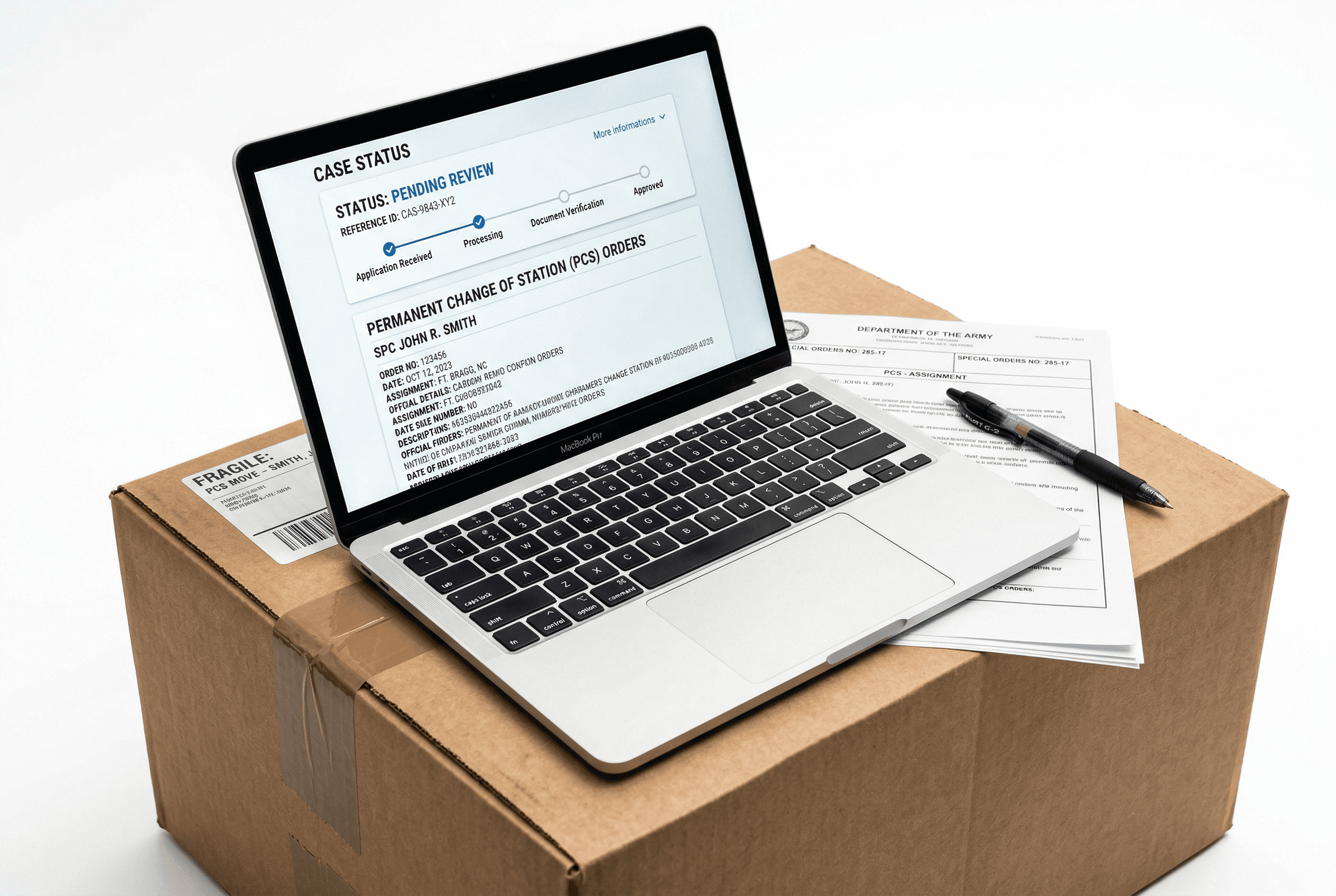
You just got orders to Joint Base Charleston. Or maybe MCAS Beaufort. You're already thinking about housing, schools, the move itself. But somewhere in the back of your mind, there's another question: what happens to the immigration case we already have pending?
This is one of the most common conversations I have with military families. A PCS (Permanent Change of Station) doesn't pause your immigration case. USCIS doesn't know you got orders unless you tell them. And if you don't take the right steps at the right time, a routine military move can turn into an immigration headache that takes months to untangle.
I wrote a comprehensive guide to PCS moves and immigration that covers the full picture. This article focuses specifically on what to do when Charleston is your destination.
The First 10 Days Matter Most
Federal law requires every non-citizen to update their address with USCIS within 10 days of moving. This is done through Form AR-11, which you can file online. It sounds simple, and it is. But I've seen families skip this step in the chaos of a PCS, and the consequences are real.
USCIS sends all correspondence to the address on file. If your spouse's interview notice, Request for Evidence (RFE), or approval goes to your old address in San Diego or Fort Bragg, you may not see it until it's too late. Missed RFE deadlines can result in a denied case. Missed interview notices mean rescheduling, which adds months.
File the AR-11 the moment you have your Charleston address confirmed. Don't wait until you're fully unpacked.
Transferring a Pending Case to Charleston
Filing the AR-11 updates your address, but it does not automatically transfer your case to the Charleston USCIS Field Office. These are two separate steps, and most families don't realize that.
If you have a pending application that involves a field office interview (like a marriage-based green card or naturalization), you'll need to request that USCIS transfer the case from your old field office to Charleston. The process involves contacting USCIS through the online portal or by calling the USCIS Contact Center. Include a copy of your PCS orders with the request.
The Charleston field office at 1821 Sam Rittenberg Blvd, Charleston, SC 29407 handles interviews for the surrounding area. Transfers can take anywhere from a few weeks to a couple of months. The earlier you request it, the less disruption to your timeline.
When You're Coming from Overseas
PCS moves from overseas duty stations to Charleston present a different set of challenges. If your spouse was processing a visa at a U.S. consulate abroad, that case may need to be restarted or transitioned to a domestic filing. If your spouse has been living overseas on a military-related status, the re-entry to the U.S. triggers new considerations about maintaining status and filing timelines.
I see this frequently with families coming from Germany, Japan, and Korea. The key is to plan the immigration filing around the PCS, not after it. If you know you're coming back to the States and your spouse needs a green card, start the conversation with an attorney before you leave your overseas duty station. Our overseas naturalization guide covers some of the specific pathways available to servicemembers stationed abroad.
Deployment During a PCS Transition
This is the scenario nobody wants but plenty of families face: you PCS to Charleston, and shortly after arrival, you deploy. If your spouse's immigration case is still pending, who handles the next steps? Who shows up to the interview?
The answer depends on the case type, but in most situations, your attorney can attend the interview with your spouse and present a deployment letter to explain the petitioner's absence. USCIS generally accommodates military deployments, but you need to have this documented and communicated in advance. Our deployment timeline planning guide walks through how to prepare for this.
Having an attorney already in place before deployment makes this manageable. Trying to find representation from a forward operating base is not something I'd recommend.
A PCS Checklist for Your Immigration Case
If you have a pending immigration case and you're PCSing to the Charleston area, here's the sequence I recommend:
- As soon as you receive orders: Contact your immigration attorney (or find one in Charleston). Share a copy of your orders and your current case status.
- Before you move: Request an expedite if your case is close to decision. Gather all original immigration documents (don't pack them in the moving truck).
- Within 10 days of arrival: File Form AR-11 to update your address with USCIS. Do this online.
- After the AR-11: Request a case transfer to the Charleston field office if your case involves an interview.
- Ongoing: Monitor your case status online. Keep your attorney updated on any changes to your duty status or upcoming deployments.
How Occam Helps with PCS Transitions
We handle the logistics of a PCS-related case transition so you can focus on the move itself. That means managing the address updates, coordinating case transfers, requesting expedited processing when appropriate, and making sure nothing falls through the cracks between your old duty station and Charleston.
Everything runs through our digital client portal, so you can check your case status whether you're at Joint Base Charleston, on TDY, or deployed. No office visits required unless you want one.
Orders change. Your case strategy shouldn't fall apart when they do. If you're PCSing to Charleston and have a pending immigration case, reach out early. The sooner we're involved, the smoother the transition.