

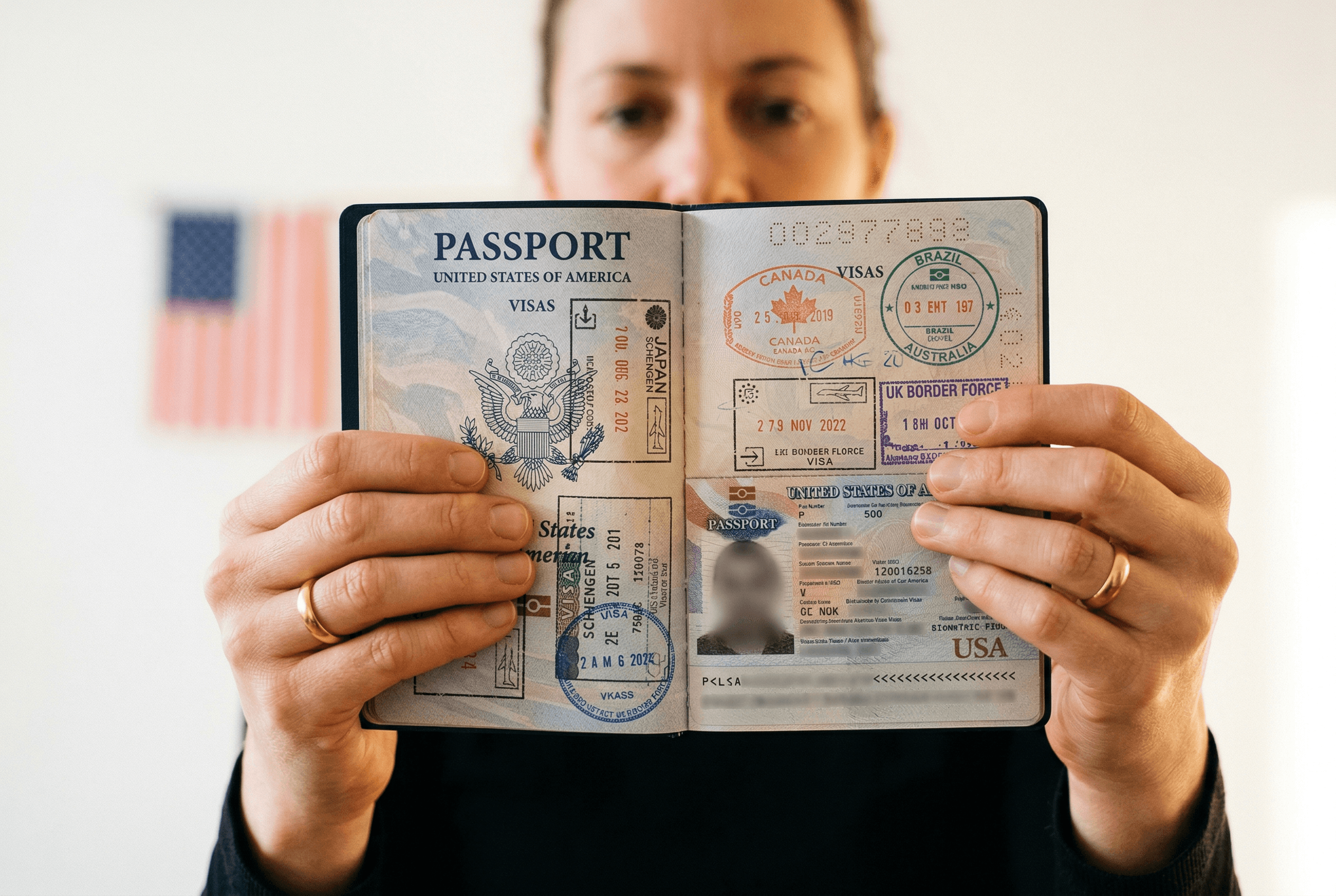
If you're a military spouse living on a base in Germany, Japan, or South Korea, the question of naturalization can feel like it's on permanent hold. You know you're eligible. You want to move forward. But everything about the process seems designed for people living in the U.S.
Here's the thing: it doesn't have to wait. Federal law specifically accounts for your situation, and there's a path to citizenship that doesn't require you to be stateside.
What INA §316(b) Actually Does
Most naturalization applicants must show they've lived continuously in the United States for a certain period before filing. For military spouses stationed overseas, that requirement would be impossible to meet.
INA §316(b) solves this. It allows spouses of U.S. citizen service members who are stationed abroad under official military orders to naturalize without meeting the usual residency and physical presence requirements. The statute treats your time overseas as if you were living in the U.S., as long as the service member is on active duty and you're residing with them.
This isn't a workaround or an exception buried in policy guidance. It's written directly into the Immigration and Nationality Act.
Who Qualifies
To use INA §316(b), you need to meet a few conditions:
- You're the spouse of a U.S. citizen who is an active-duty member of the U.S. Armed Forces
- You're residing abroad with your spouse under official military orders
- You're otherwise eligible for naturalization (good moral character, basic English and civics knowledge, lawful permanent resident status)
- You're present in the U.S. at the time of naturalization, or you're naturalizing at a U.S. embassy or consulate abroad
The last point is the key. You don't have to come back to the U.S. to do this.
How Embassy Naturalization Works
The process starts the same way as any naturalization case: you file Form N-400. But instead of processing through a domestic USCIS field office, your application routes through USCIS's overseas operations.
Here's what the process typically looks like:
- File N-400 with supporting documents (marriage certificate, military orders, evidence of LPR status, passport photos)
- Biometrics collection at the nearest embassy or military installation with biometrics capability
- Interview at a designated U.S. embassy or consulate
- Oath ceremony at the same embassy or at a scheduled ceremony on a nearby military installation
Not every embassy handles naturalization. USCIS partners with embassies in countries that have significant U.S. military presence. Germany (particularly near Ramstein and Stuttgart), Japan (near Yokosuka, Okinawa), South Korea (near Camp Humphreys), and Italy (near Aviano, Naples) are the most common. The U.K., Spain, and several other countries also process cases periodically.
Before filing, contact the American Citizen Services (ACS) section at your nearest embassy to confirm they handle naturalization and ask about current wait times.
Documents You'll Need
Gather these before you file:
- Completed Form N-400
- Copy of your green card (front and back)
- Passport-style photos (2)
- Marriage certificate
- Spouse's military orders showing overseas assignment
- Spouse's proof of U.S. citizenship (birth certificate or certificate of citizenship)
- Evidence of any name changes
- Any prior arrest or court records (if applicable)
Military installations often have a legal assistance office (JAG) that can help you organize documents, but they typically don't handle the immigration filing itself. That's where working with an immigration attorney makes a real difference.
Common Complications
Gaps in orders. If your spouse's orders expire or there's a gap between assignments, USCIS may question whether you still qualify under §316(b). Keep copies of every set of orders, including amendments.
Embassy scheduling delays. Overseas USCIS operations don't run on the same schedule as domestic offices. Interview and oath ceremony availability can be limited, especially at smaller posts. Some applicants wait months for a ceremony slot.
Biometrics logistics. Not every embassy has biometrics equipment. You may need to travel to a different city or installation for fingerprinting. Plan for this early.
PCS during the process. If you receive new orders and PCS to a different country mid-application, your case may need to transfer to a different embassy. This doesn't restart the process, but it adds time. If a PCS is on the horizon, read our guide to PCS moves and immigration for strategies on managing the transition.
Naturalization vs. Waiting Until You're Stateside
Some families choose to wait until they rotate back to CONUS to naturalize. That's a valid choice, but it comes with tradeoffs.
Waiting means your spouse remains a green card holder during the overseas tour. That means:
- They need a valid green card or re-entry permit to travel back to the U.S.
- Extended absences from the U.S. (over 1 year without a re-entry permit) can jeopardize LPR status
- They can't vote or hold a U.S. passport
- If something goes wrong with the green card, resolving it from overseas is significantly harder
Naturalizing overseas eliminates all of those risks. Once your spouse is a citizen, travel and re-entry become straightforward.
How Occam Helps
We work with military families stationed around the world. Overseas naturalization cases require careful coordination with embassy schedules, USCIS overseas operations, and military legal offices. We handle the filing, track the case through embassy processing, and prepare your spouse for the interview.
If your family is weighing whether to naturalize now or wait, we can walk through the specific factors for your situation. Every assignment, every timeline, every family's immigration history is different.
Learn more about the full range of military immigration benefits or start with the Military Immigration 101 overview. For a deeper look at the naturalization process for service members and their families, see our naturalization guide.
Ready to move forward from overseas? Get in touch and we'll help you map out the process from wherever you're stationed.