
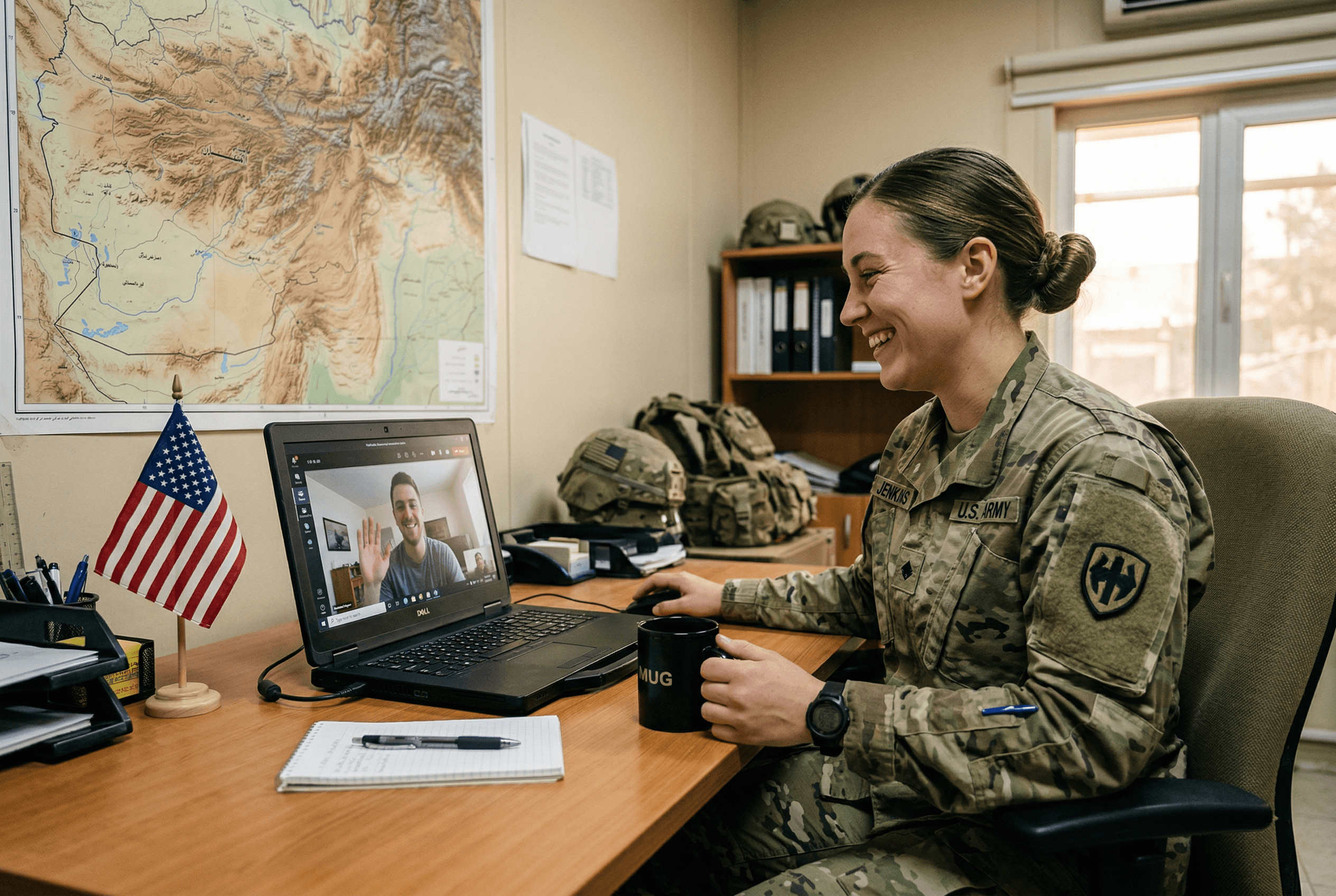
An Overseas Assignment Shouldn't Put Citizenship on Hold
Every year, thousands of service members and their families are stationed outside the United States — in Germany, Japan, South Korea, Italy, and dozens of other countries. For those who are also navigating the immigration process, an overseas assignment can feel like a forced pause on one of the most important milestones in their lives: becoming a U.S. citizen.
But it doesn't have to be. Federal law provides multiple pathways for naturalization while stationed abroad. Some are available specifically to military members. Others extend to spouses and civilian employees working overseas for the U.S. government. The key is knowing which pathway applies to your situation — and how to navigate the logistics of filing, biometrics, interviews, and oath ceremonies from thousands of miles away.
This guide covers every major route to overseas naturalization, the documentation you'll need, how USCIS international offices work, and what to expect at each stage of the process.
INA §316(b): Overseas Naturalization for Qualifying Employees
Section 316(b) of the Immigration and Nationality Act creates a pathway for lawful permanent residents who are employed abroad by certain qualifying organizations. This provision is not limited to military members — it also covers U.S. government employees, employees of recognized American institutions of research, and employees of qualifying American firms engaged in international trade and commerce.
Who Qualifies Under §316(b)
To be eligible, you must meet all of the following:
- You are a lawful permanent resident (green card holder)
- You are employed by, or under contract with, the U.S. government (including the military), a recognized American institution of research, a recognized American religious organization, or a qualifying U.S. company engaged in international trade
- Your employment requires you to be stationed abroad
- You were physically present in the United States at the time your qualifying employment began (or you return briefly to establish presence before filing)
The critical benefit of §316(b) is that time spent abroad in qualifying employment does not count against you for continuous residence or physical presence purposes. In other words, your overseas assignment does not break the residency clock the way a standard prolonged absence would.
The Application Process Under §316(b)
You file Form N-400 (Application for Naturalization) and include Form N-470 (Application to Preserve Residence for Naturalization Purposes) if you have not yet met the continuous residence requirement before departing. You must also provide documentation of your qualifying employment — typically a letter from your employer confirming your overseas assignment, your position, and the nature of the organization.
USCIS may process your application at an overseas office (if available) or require you to return to the United States for the interview and oath ceremony. This depends on where you are stationed and current USCIS operational capacity at international locations.
Military-Specific Overseas Naturalization Under INA §328 and §329
Active duty service members have additional pathways to naturalization that are specifically designed for military personnel — and both can be completed overseas.
INA §328: Peacetime Military Naturalization
Under Section 328, non-citizen service members who have served honorably for at least one year during peacetime may naturalize with significantly reduced requirements. There is no specific state residency requirement, and the standard five-year continuous residence period is reduced. You must be a lawful permanent resident, but you may apply while stationed abroad.
INA §329: Wartime and Hostile Fire Naturalization
Section 329 goes even further. Service members who have served during a designated period of hostilities — which includes the period from September 11, 2001, to the present — may naturalize with no residency or physical presence requirement at all. You do not need to be a lawful permanent resident. If you served honorably during a qualifying period, you may be eligible to naturalize immediately, regardless of where you are stationed.
Overseas Naturalization Ceremonies at Military Installations
USCIS has a long history of conducting naturalization ceremonies at overseas military installations. These events bring the oath ceremony to service members stationed abroad, so they do not need to return to the United States to complete the process. Ceremonies have been held at bases in Germany, Japan, South Korea, Italy, Bahrain, and other locations where significant U.S. military populations are present.
These ceremonies are typically coordinated between USCIS, the Department of Defense, and the installation's legal assistance office. Frequency and availability vary — some installations host ceremonies regularly, while others may only hold them when enough applicants are ready.
Embassy and Consulate Naturalization
In some cases, naturalization can also be completed at a U.S. embassy or consulate abroad. This is more commonly used under §316(b) for civilian employees, but military-connected applicants may also use this route depending on location and USCIS coordination with the State Department. Embassy naturalization is less predictable than installation-based ceremonies. Availability depends on the embassy's relationship with USCIS and local operational logistics.
Documentation Requirements for Overseas Naturalization
Filing for naturalization from abroad requires the same core documents as a stateside application — plus additional military and employment records that establish your eligibility for overseas processing.
Standard N-400 Documents
- Completed Form N-400 (Application for Naturalization)
- Two passport-style photographs
- Copy of your green card (front and back)
- Government-issued ID
- Travel history documentation (passport pages showing entries and exits)
- Tax returns for the relevant qualifying period
Military-Specific Documents
- Form N-426 (Request for Certification of Military or Naval Service) — completed and certified by your unit's personnel office. This form verifies your dates of service, branch, and character of service
- DD-214 (Certificate of Release or Discharge from Active Duty) — if you have separated from service. Active duty members will not have a DD-214 yet and should use the N-426 instead
- Military orders showing your overseas assignment and duty station
- Service record or personnel file excerpts confirming active duty status
For §316(b) Civilian Applicants
- Letter from your employer confirming the nature of the organization, your position, and dates of overseas employment
- Form N-470 (Application to Preserve Residence for Naturalization Purposes) if you had not yet met the continuous residence requirement before departing
- Documentation proving the organization qualifies under §316(b) — this may include articles of incorporation, organizational charter, or government contract information
The Overseas Naturalization Process Step by Step
The overseas naturalization process follows the same general sequence as stateside naturalization, but with additional logistical considerations at nearly every step.
Step 1: File Form N-400
You can file N-400 from abroad. Military applicants filing under INA §328 or §329 should file with USCIS using the military address and indicate military filing on the application. For §316(b) filers, include the N-470 if needed. All applicants should include their overseas mailing address and a reliable contact method — email and phone — since mail delivery to overseas locations can be slow or unreliable.
Step 2: Biometrics
Biometrics (fingerprinting) is required for all naturalization applicants. If you are stationed near a USCIS international office, biometrics can be completed there. Otherwise, USCIS may coordinate with a U.S. embassy, consulate, or military installation to collect biometrics. In some cases, applicants complete biometrics during leave or temporary duty travel to a location with USCIS facilities. Your attorney can request a specific biometrics location based on your duty station.
Step 3: The Naturalization Interview
The interview is the most logistically challenging step for overseas applicants. USCIS international offices can conduct interviews abroad, but scheduling depends on office capacity and your location. For applicants near a USCIS overseas office, the interview is conducted there. For others, options include traveling to the nearest USCIS international office, coordinating an interview during leave in the United States, or waiting for a USCIS mobile event at your installation.
The interview itself is the same as stateside: an officer reviews your application, asks questions about your background and eligibility, and administers the English and civics tests (unless you qualify for an exemption under military provisions).
Step 4: The Oath Ceremony
Once approved, you must take the Oath of Allegiance to complete your naturalization. Overseas oath ceremonies are held at military installations and, in some cases, at U.S. embassies. These are often significant events — USCIS has held group ceremonies at bases worldwide, sometimes timed to coincide with national holidays. If no overseas ceremony is available, you can take the oath upon return to the United States.
Timeline Expectations
Overseas naturalization timelines are inherently less predictable than stateside processing. Active duty applicants may benefit from expedited processing, but the logistical overhead of overseas coordination can add time. The national average processing time for military N-400 applications is approximately 4 to 6 months stateside, but overseas cases typically take 8 to 14 months from filing to oath due to the additional logistics of coordinating biometrics, interviews, and ceremonies at international locations. Some cases move faster — particularly at installations with regular USCIS presence — and some take longer if the applicant is in a remote location without convenient access to a USCIS international office.
USCIS Overseas Offices
USCIS operates a limited number of international immigration offices that provide services to U.S. military personnel, government employees, and their families stationed abroad. These offices handle naturalization interviews, biometrics, and other immigration services that would normally require a trip to a stateside USCIS office.
Where They're Located
As of 2025, USCIS maintained approximately 12 international field offices across 12 countries. These offices are located in Beijing and Guangzhou (China), Havana (Cuba), San Salvador (El Salvador), Quito (Ecuador), Guatemala City (Guatemala), Tegucigalpa (Honduras), New Delhi (India), Nairobi (Kenya), Mexico City (Mexico), Doha (Qatar), and Ankara (Turkey). The number of offices and their service scope has fluctuated over the years — USCIS operated 24 international offices before a significant reduction beginning in 2018, and has since selectively reopened offices in response to demand. Not all offices provide the same range of services, and naturalization processing may only be available at certain locations.
What Services They Provide
USCIS international offices can handle a range of immigration services, including:
- Naturalization applications and interviews
- Biometrics collection
- Form I-130 (Petition for Alien Relative) processing for family members
- Replacement of lost or expired green cards for LPRs abroad
- General immigration inquiries and case status updates
How to Contact Them
Contacting USCIS international offices can be less straightforward than reaching a domestic field office. The USCIS Contact Center can provide general guidance, and military legal assistance offices on your installation are often the best starting point for connecting with the nearest USCIS international presence. Your installation's Staff Judge Advocate (SJA) or legal assistance office may have an established relationship with USCIS overseas staff.
Limitations
Not all USCIS international offices provide the same range of services. Some may only handle naturalization interviews during scheduled visits rather than on a continuous basis. Processing times may be longer due to smaller staff and higher case-to-officer ratios. And not every overseas location has a USCIS office — if you're stationed in a more remote area, you may need to travel significant distances or coordinate alternative arrangements.
Spouses Naturalizing Overseas
Military spouses face unique challenges when pursuing naturalization while stationed abroad with their service member. The good news: the law accounts for this situation. The logistics, however, require planning.
Requirements for Military Spouses Abroad
If you are a lawful permanent resident married to a U.S. citizen who is a member of the armed forces, INA §316(b) may allow you to naturalize without meeting the standard continuous residence and physical presence requirements — provided your absence from the U.S. is due to your spouse's military orders. You still need to pass the English and civics tests, demonstrate good moral character, and complete the full N-400 process.
Maintaining Continuous Residence While Abroad
For spouses who do not qualify under §316(b) — for example, if they have not yet met the initial residency requirement before departing — maintaining continuous residence can be complicated by an overseas tour. Extended absences from the U.S. (more than six months) can raise a presumption that continuous residence has been broken. Filing Form N-470 before departure can preserve your residence for naturalization purposes, but only if you meet the qualifying criteria.
The safest approach: consult with an immigration attorney before PCSing overseas. If naturalization is on your timeline, a brief pre-departure assessment can determine whether you should file before leaving, file the N-470, or plan to file from abroad under §316(b).
What If There's No USCIS Presence at Your Location?
Not every overseas duty station has convenient access to a USCIS office. If you're in a location without USCIS international presence, your options include traveling to the nearest USCIS office (which may be in another country), coordinating biometrics and interviews during leave in the United States, or waiting for a mobile USCIS event at or near your installation. In some cases, your attorney can advocate for alternative arrangements with USCIS on your behalf.
How Occam Supports Overseas Cases
Overseas naturalization adds logistical complexity that most immigration practices are not set up to handle. Between time zone differences, unreliable mail delivery, and the challenge of coordinating with USCIS international offices, military families abroad need an attorney who can work seamlessly across distance.
Virtual-First Model
Occam Immigration was built to work remotely from day one. Every aspect of the process — consultations, document review, case preparation, filing — is handled digitally. Whether you're in Stuttgart, Okinawa, or Camp Humphreys, the process is the same as if you were across the street from our office. Meetings are scheduled around your time zone, not ours.
Document Coordination for Overseas Clients
Military records, personnel certifications, and government employment documentation often need to be gathered from multiple offices across different commands and time zones. Occam handles the coordination — tracking down the right offices, following up on pending certifications, and making sure every document is in order before filing. We know what USCIS expects for overseas applications, and we prepare accordingly.
OccamOne: Accessible Globally
OccamOne — Occam's client platform — gives you real-time visibility into your case from anywhere in the world. Upload documents, track milestones, message your legal team, and see exactly where things stand. No waiting for email replies across an 8-hour time difference. No wondering whether your paperwork made it. Everything is in one place, updated in real time.
If your family has served this country from the other side of the world, your immigration attorney should be able to meet you there. That's what Occam is built to do.