

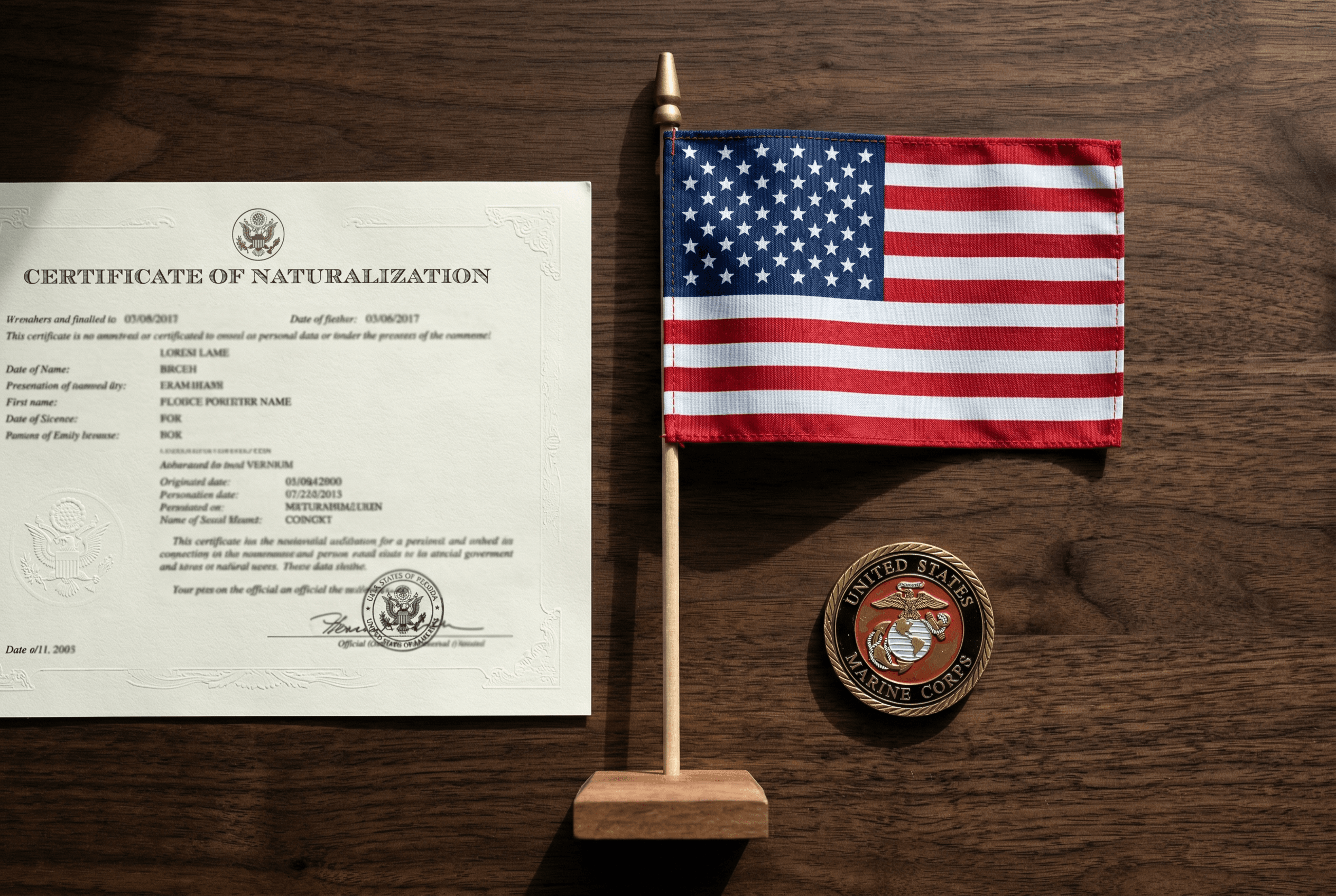
If your spouse is a Marine at Parris Island or MCAS Beaufort, you've probably thought about citizenship at some point. Maybe it came up during a conversation about voting, or about what would happen if your family got orders overseas, or simply because you're tired of renewing your green card every ten years.
Naturalization for military spouses is one of the areas I focus on in my Charleston practice, and families from the Beaufort corridor make up a meaningful share of those cases. The Marine Corps presence at Parris Island and MCAS Beaufort means there's a steady population of families navigating immigration while adapting to the rhythms of military life.
This article is specifically for spouses of servicemembers. If the servicemember themselves wants to naturalize, the rules are different, and I cover those in our guide to naturalization for military members and spouses.
Two Main Paths for Military Spouses
Military spouses generally pursue naturalization through one of two routes:
Standard spousal naturalization (INA Section 319(a)). If you've been a lawful permanent resident for at least 3 years, have been married to and living with your U.S. citizen spouse for that entire period, and meet the other standard requirements (physical presence, good moral character, civics knowledge), you can apply for naturalization. This is the same path available to any spouse of a U.S. citizen. Military service by your spouse does not change the requirements, but it does give you access to base resources that can help with preparation.
Overseas military spouse naturalization (INA Section 319(e)). This is the path most people don't know about. If your servicemember spouse is about to be stationed overseas (or is currently overseas), Section 319(e) allows the entire naturalization process, including fingerprints, the interview, and the oath ceremony, to happen overseas at a U.S. embassy, consulate, or military installation. You don't need to return to the U.S. at all. For Parris Island and Beaufort families, this becomes relevant when orders come in for Okinawa, Iwakuni, or any other overseas duty station.
Our naturalization for military members and spouses guide covers both paths in detail.
What You Need Before Filing
Regardless of which path you take, you'll need to have several things in order before filing Form N-400:
- A permanent (unconditional) green card, or a pending I-751 petition to remove conditions
- Proof of your spouse's military service (DD-214, military orders, or a letter from the command)
- Marriage certificate and evidence that the marriage is genuine and ongoing
- Tax returns and evidence of shared financial life
- Travel history (if you've been overseas with your spouse on orders, bring documentation)
- No criminal history issues (even minor offenses should be disclosed and reviewed by an attorney)
The Beaufort-to-Charleston Filing Connection
One thing that surprises families near Parris Island and MCAS Beaufort is that there's no USCIS field office in Beaufort. Naturalization interviews for the area are handled by the Charleston USCIS Field Office at 1821 Sam Rittenberg Blvd, Charleston, SC 29407. That's about a 75-mile drive from Beaufort.
This isn't a dealbreaker, but it's worth knowing for planning purposes. Your interview will be scheduled in Charleston, and you'll need to appear in person. If your spouse is deployed and cannot attend, your attorney can accompany you and present documentation explaining the absence.
The good news is that Charleston's processing times for naturalization tend to be reasonable compared to larger metro areas. Most cases move from filing to oath ceremony within 6 to 12 months, though individual timelines vary.
Timing Naturalization Around Military Life
The biggest challenge I see with military spouse naturalization isn't the paperwork. It's the timing. Marine families at Parris Island rotate through on training cycles. MCAS Beaufort families get orders to new duty stations. And the question is always the same: should I file now or wait?
My general advice is to file as soon as you're eligible. Here's why:
- USCIS processing takes months. If you wait for the "perfect" time, you may miss your window entirely.
- If PCS orders arrive mid-case, the application can be transferred. It's not ideal, but it's manageable.
- Citizenship provides stability that a green card doesn't. No more renewal headaches, no travel complications, and full voting rights.
- If overseas orders come, you want to be a citizen before you leave. It simplifies everything from re-entry to employment abroad.
How Occam Helps Marine Families with Naturalization
We work with military families across the Charleston and Beaufort area on naturalization cases. The process starts with an eligibility review to confirm which path applies to your situation, followed by document preparation, filing, and interview coaching. Everything is handled through our digital client portal, which means you don't need to drive to Charleston for every update. Check our Charleston military immigration page for more on how we serve families in the area.
For families thinking about the bigger picture, our Military Immigration 101 page gives an overview of all the immigration paths available to military families, not just naturalization.
If you're a military spouse near Parris Island or Beaufort and you're thinking about citizenship, we're here to help. You've built a life around your family's service. Becoming a citizen is a natural next step, and it doesn't have to be complicated.