

I sat across from a veteran last year who had been a lawful permanent resident for over a decade. He’d served four years in the Army, received an honorable discharge, and never once been told he could naturalize on an expedited basis. He assumed the standard five-year wait applied to him like everyone else.
It didn’t. And he’d been eligible for years.
That conversation is more common than you’d think. The immigration benefits available to military veterans are real, meaningful, and surprisingly underused. If you served and you or your family members have immigration questions, there’s a good chance you’re sitting on options you don’t know about.
INA §328 and §329: The Statutes Most Veterans Have Never Heard Of
Two sections of the Immigration and Nationality Act create special pathways for service members and veterans. They’re not new, but they’re rarely discussed outside of immigration law circles.
INA §328 applies to service members who served honorably during peacetime. If you had at least one year of military service and hold lawful permanent resident status, you can naturalize without meeting the standard five-year residency requirement. You also don’t need to meet the typical continuous residence or physical presence tests.
INA §329 is broader. It applies to anyone who served during a designated period of hostility, which includes every day since September 11, 2001. Under §329, you may be eligible to naturalize even without first obtaining a green card. The residency and physical presence requirements are waived entirely.
Here’s the part that surprises most veterans: these benefits don’t expire. If you served honorably during a qualifying period, you can use these provisions years or even decades after leaving the military. There’s no deadline.
Your DD-214 Is More Powerful Than You Think
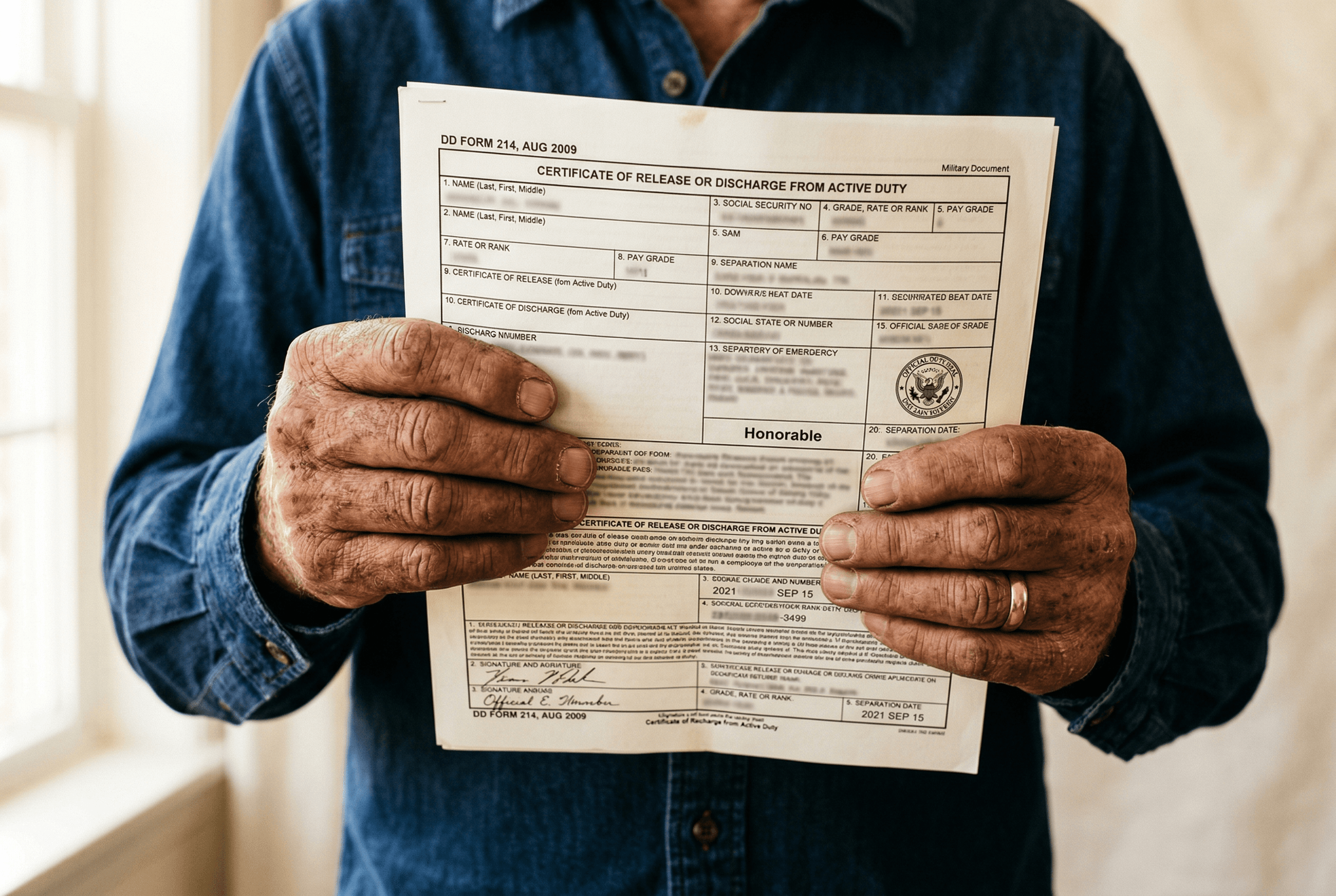
The DD-214 (Certificate of Release or Discharge from Active Duty) is the foundation of every military-based immigration case. USCIS treats it as primary evidence of service, and it tells them three critical things:
- Dates of service — which determines whether §328 or §329 applies
- Character of discharge — honorable discharge is required for both provisions
- Branch and duty status — confirms qualifying active duty service
If you’ve lost your DD-214, you can request a replacement through the National Personnel Records Center. I always recommend veterans obtain certified copies before starting any immigration process. It’s the single most important document in your case.
Expedited Processing: Faster Than the Civilian Track
Military-based naturalization cases often move faster than their civilian equivalents. USCIS has dedicated procedures for processing military applications, and in many cases, the timeline from filing to oath ceremony is significantly shorter.
For veterans, this means less waiting. Combined with the waived residency requirements under §328 and §329, the path from application to citizenship can be remarkably efficient.
If you’re a veteran who assumed the process would take years, it’s worth a second look.
Parole in Place: The Benefit for Veteran Families
One of the most underused tools in military immigration is Parole in Place (PIP). This provision allows undocumented spouses, children, and parents of veterans to receive a temporary lawful status without leaving the country.
Why does that matter? Because without PIP, an undocumented family member would typically need to depart the United States and apply for a visa at a consulate abroad. That departure can trigger three- and ten-year bars on reentry. PIP sidesteps that risk entirely.
Once paroled in place, the family member may be eligible to adjust status to lawful permanent resident. For many military families, this is the pathway that changes everything.
I’ve worked with veteran families who didn’t know PIP existed until years after the service member’s discharge. If your spouse or child is undocumented and you served honorably, this is the first conversation we should have.
Peacetime vs. Wartime: Why the Distinction Matters
The difference between INA §328 and §329 comes down to when you served.
Peacetime service (§328) requires:
- One year of honorable active duty service
- Lawful permanent resident status at the time of filing
- Good moral character
Service during a designated hostile period (§329) requires:
- Any length of honorable service during the qualifying period
- Good moral character
- No requirement for prior lawful permanent resident status
Since September 11, 2001, the United States has been in a continuous designated period of hostility. That means virtually every post-9/11 veteran qualifies under §329, the more favorable provision.
If you served before 9/11, §328 likely applies. The requirements are slightly different, but the benefits are still substantial compared to the civilian naturalization track.
Common Benefits Veterans Miss
Based on the cases I’ve handled, here are the benefits veterans most frequently overlook:
- No five-year residency requirement — both §328 and §329 waive the standard waiting period
- No continuous residence test — deployments and moves don’t reset your eligibility clock
- No physical presence requirement under §329 — you don’t need to prove you were physically in the U.S. for a specific number of days
- PIP for family members — your undocumented spouse, child, or parent may qualify for parole in place
- Posthumous citizenship — service members who die during qualifying service can receive citizenship posthumously, which can benefit surviving family members’ immigration cases
- Overseas naturalization — veterans stationed abroad can naturalize at certain overseas locations without returning to the U.S.
How Occam Helps Veterans Navigate This
At Occam Immigration, we work with veterans and military families to identify exactly which benefits apply based on service dates, discharge status, and family circumstances. Every case starts with a review of the DD-214 and a full assessment of available pathways.
We handle the document assembly, USCIS filing, and interview preparation so you can focus on what comes after, not the paperwork that gets you there.
If you served this country, the immigration system has provisions built specifically for you. The question is whether anyone has ever explained them.
Your Next Step
If you’re a veteran or the family member of a veteran with immigration questions, reach out to our team. We’ll review your DD-214 and service record, identify every benefit that applies to your situation, and build a plan from there.
You earned these benefits. Let’s put them to work.