

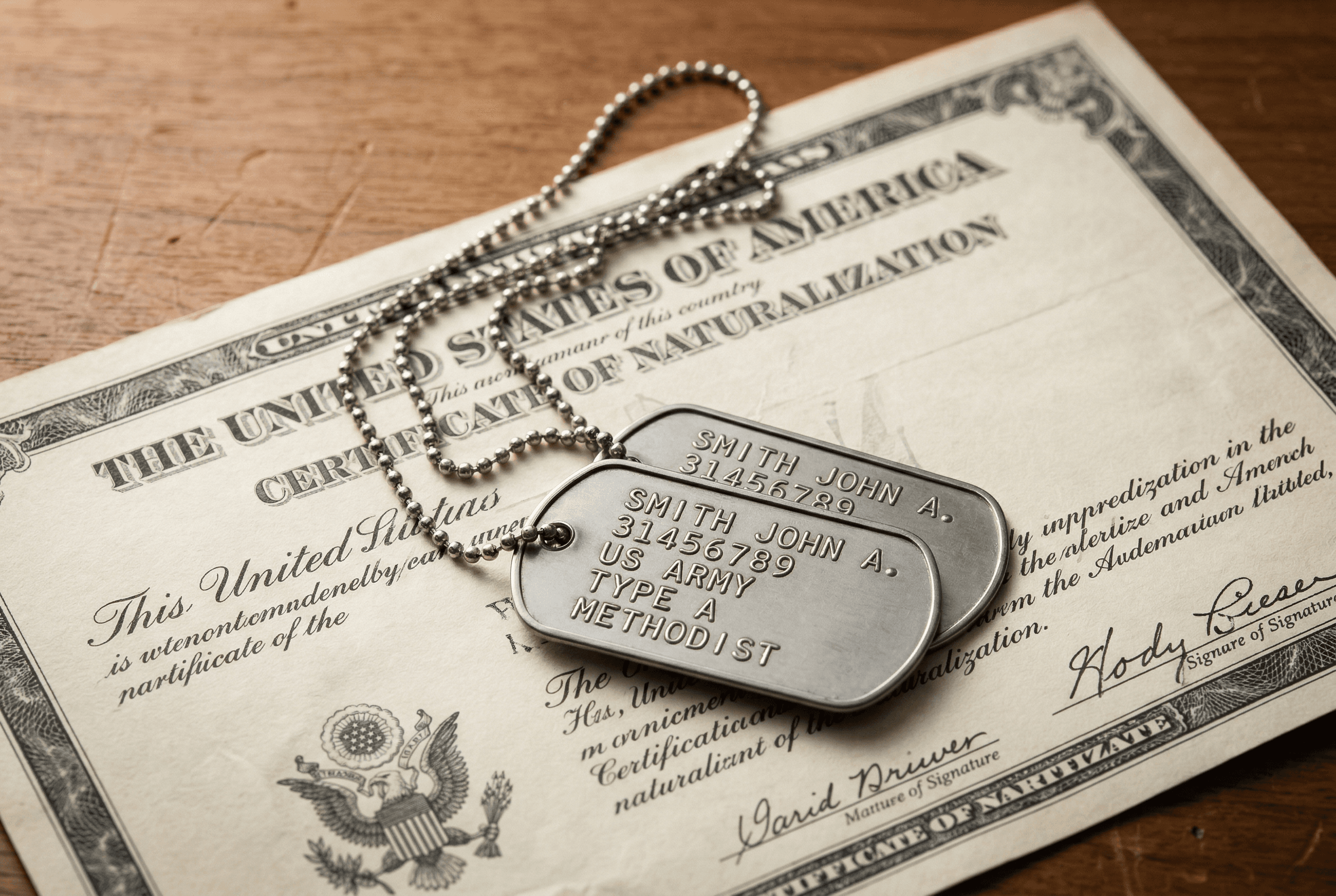
If you've spent any time researching military naturalization, you've probably run into two numbers: 328 and 329. They refer to sections of the Immigration and Nationality Act (INA), and they represent two distinct paths to U.S. citizenship for service members. Most people I talk to either confuse them or don't realize both exist.
The distinction matters because it changes what you need to prove, how fast you can naturalize, and what risks come with the process. Let me walk through both in plain language.
INA 328: The Peacetime Path
INA Section 328 is the naturalization provision for service members who serve during peacetime (or whose service doesn't fall within a designated period of hostility). Think of it as the "standard" military naturalization track, with significant advantages over the civilian process but still carrying some requirements.
What INA 328 requires:
- One year of honorable service: You must have served honorably in the U.S. Armed Forces for at least one year. This can be consecutive or cumulative.
- Lawful permanent resident status: You must be a green card holder. Unlike INA 329, this section does not waive the LPR requirement.
- Reduced residency: The standard five-year continuous residence requirement for civilian naturalization is reduced. If you're still serving or recently separated, you may be able to apply with less time as an LPR.
- Good moral character: Same standard as civilian applicants.
- English and civics tests: Required, same as civilian applicants.
The practical advantage of INA 328 is speed. Instead of waiting five years as an LPR before applying, a service member with one year of honorable service can file much sooner. That's a meaningful difference, especially for someone whose military career is moving faster than the civilian naturalization timeline.
One important detail: if you're currently serving, you can file Form N-400 while on active duty. If you've already separated, you must file within six months of your honorable discharge to use the reduced residency provisions.
INA 329: The Wartime Path
INA Section 329 is the more powerful of the two provisions, and it applies to service members who serve during a designated period of hostility. Here's the key fact that changes everything: the post-9/11 period has been designated as a period of hostility under Executive Order 13269, and that designation remains in effect.
That means if you served honorably at any point after September 11, 2001, you may qualify under INA 329. And the benefits are significant.
What INA 329 offers:
- No residency requirement: You do not need to have been an LPR for any specific period. In fact, you do not need to be an LPR at all. This is the biggest difference from INA 328.
- No physical presence requirement: You don't need to prove you've been physically present in the U.S. for a certain number of days.
- No minimum service period: There is no one-year service requirement. Even a single day of qualifying active-duty service during the designated period can be sufficient.
- Can naturalize abroad: Service members stationed overseas can take the oath of citizenship at a U.S. embassy, consulate, or military installation.
When I explain this to clients, the reaction is usually surprise. Military service unlocks immigration paths most people never hear about, and INA 329 is arguably the most generous naturalization provision in all of U.S. immigration law.
The Confusion Between 328 and 329
Here's where most people get tripped up. They hear "military naturalization" and assume there's one process. But the two provisions have fundamentally different eligibility requirements and different implications.
The practical question: Which one applies to you?
If you served on active duty at any point after September 11, 2001, and you served honorably, you likely qualify under INA 329. That's the stronger provision with fewer requirements. If your service was entirely before 9/11 or during a non-designated period, INA 328 is your path, and you'll need to meet the LPR and residency requirements. For background on the civilian naturalization process, see our naturalization overview.
I've seen cases where a service member filed under INA 328 when they actually qualified under INA 329, which meant they provided more documentation than necessary and waited longer than they needed to. Filing under the right provision from the start saves time, reduces stress, and avoids unnecessary complications.
The Risk Nobody Mentions
INA 329 comes with a provision that INA 328 does not: the possibility of denaturalization. If you naturalize under INA 329 and are subsequently separated from the military under other than honorable conditions before completing five years of honorable service, your citizenship can potentially be revoked.
This is rare, but it's real. It means that for INA 329 applicants who are still actively serving, maintaining honorable service isn't just a career concern. It's directly tied to your immigration status. I make sure every client understands this before we file.
For veterans who have already been honorably discharged, this risk generally doesn't apply. But if you're currently serving and naturalize under INA 329, be aware that your citizenship and your service record are linked until you hit that five-year mark.
The Form N-426: Your Key Document
Regardless of whether you file under INA 328 or 329, you'll need Form N-426, the Request for Certification of Military or Naval Service. This form must be completed and certified by your branch of service. It verifies your service dates, character of service, and whether you served during a qualifying period.
Getting the N-426 certified can sometimes take time, especially for veterans or Guard/Reserve members who need to track down the right office. Start this early. It's one of the most common delays I see in military naturalization cases.
How Occam Handles Military Naturalization
At Occam Immigration, the first thing we do is figure out which provision applies to your situation. That determination shapes the entire case strategy, from what documents we need to how quickly we can file. We don't guess, and we don't default to one section because it's more familiar.
For service members stationed overseas, we coordinate with the overseas naturalization process so you can take your oath abroad without waiting for a return to the States. For those stateside, we handle the N-426 certification, the N-400 filing, interview preparation, and everything in between.
If you're a service member or veteran trying to figure out which path to citizenship applies to you, we're here to help. The answer is usually clearer than you think once someone lays out the facts.