

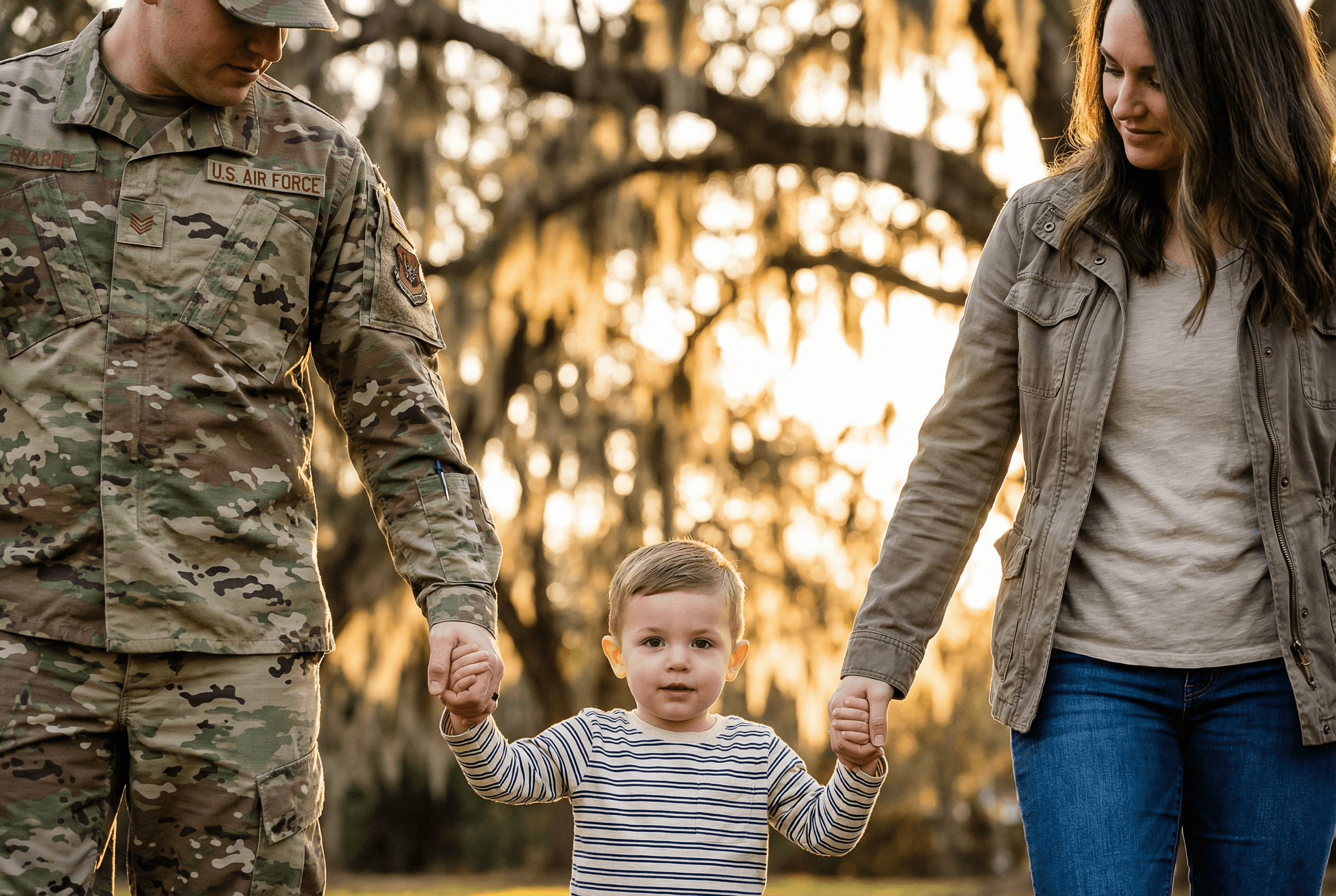
If you're reading this from base housing at Joint Base Charleston or scrolling on your phone during a lunch break at MCAS Beaufort, there's a good chance immigration is somewhere on your family's to-do list. I know because I see it every week in my practice here in Charleston.
The Lowcountry is home to a significant military population. Joint Base Charleston alone has roughly 6,000 active duty personnel across its Air Force and Navy missions. Add in MCAS Beaufort (about 4,000 Marines, 70 miles south) and Parris Island MCRD nearby, and you're looking at one of the largest military corridors on the East Coast. And where there are servicemembers, there are families with immigration questions.
This article is a local overview of what I see from military families in the Charleston area, the most common immigration paths they're navigating, and the things that trip people up.
The Cases I See Most Often
Military immigration isn't one thing. It's a collection of different case types that happen to involve a servicemember or their family. Here's what walks through my door most frequently from the Charleston-area bases:
Marriage-based green cards. This is the most common case by far. A U.S. citizen servicemember marries a foreign national, and they need to file for a green card through marriage. The process is the same as for any married couple, but military life adds complications around timing, deployments, and PCS moves.
Naturalization for servicemembers and spouses. Active duty members can pursue expedited citizenship through military service. Spouses of servicemembers also have unique options, especially if they've been living overseas on orders.
Parole in Place (PIP). For families where the non-citizen spouse or parent entered without inspection, military Parole in Place can open a path to adjustment of status that would otherwise be blocked. This is a meaningful benefit that many military families don't know about.
PCS-related case management. Not a case type, but a recurring challenge. Orders come in, the family moves, and suddenly a pending case needs to be transferred or an interview rescheduled. I cover this in depth in our PCS and immigration guide.
What Makes Charleston Different
Every USCIS field office has its own personality, and Charleston is no exception. The Charleston USCIS Field Office at 1821 Sam Rittenberg Blvd, Charleston, SC 29407 handles cases for most of the Lowcountry, including families living near Joint Base Charleston, MCAS Beaufort, and Parris Island.
Processing times here tend to be somewhat faster than larger metro offices like Atlanta or Miami, though they fluctuate. That's a real advantage for military families on tight timelines. When you're trying to get a green card approved before PCS orders kick in, every month matters.
I also see a pattern with families who PCS into Charleston from overseas duty stations. They arrive with partially completed cases, sometimes filed at a consulate abroad, and need to figure out how to pick up where they left off. This is more common than you might think, and it's one of the areas where having a local attorney who understands both military timelines and USCIS procedures makes a real difference.
Common Mistakes Military Families Make
After years of working with military families in the Charleston area, certain patterns keep coming up:
- Waiting too long to file. Military families often assume they'll "deal with immigration after this deployment" or "once we settle in." The problem is that USCIS processing takes months, and you don't control when your next set of orders arrives. File early.
- Not knowing about military-specific benefits. Programs like Parole in Place and expedited naturalization exist specifically for military families. I've met servicemembers who spent years assuming their spouse had no options, when in fact a clear path was available the entire time.
- Using a JAG office for immigration work. JAG attorneys are talented, but immigration law is a separate discipline. Most JAG offices will refer you to a civilian immigration attorney for anything beyond basic questions. That referral is the right call.
- Failing to update USCIS after a PCS move. If you move and don't update your address with USCIS within 10 days (using Form AR-11), you can miss interview notices, RFE responses, and approval notifications. I've seen cases stall for months because of a missed address change.
Resources on Base
Military families at Joint Base Charleston have access to several support systems that can complement your immigration case. The Military OneSource program provides free legal consultations, and the Airman & Family Readiness Center can connect you with local resources. These are good starting points for general questions.
For families at MCAS Beaufort and Parris Island, Marine Corps Community Services (MCCS) offers similar support. Just keep in mind that these programs provide general guidance, not case-specific legal representation. For anything involving an actual filing, a strategy decision, or a response to USCIS, you need an immigration attorney.
How Occam Helps Military Families in Charleston
We built Occam Immigration to work the way modern families actually need. That means clear timelines, digital case tracking through our client portal, and communication that doesn't require you to take leave from duty to sit in a law office.
For military families specifically, I focus on building a case strategy that accounts for the realities of military life: deployments, PCS cycles, and the unpredictability that comes with service. If you're at Joint Base Charleston, Beaufort, or Parris Island and you have immigration questions, our Charleston military immigration page has more detail on the cases we handle locally.
You can also start with our broader military immigration overview or the Military Immigration 101 if you're still getting oriented.
If you're stationed in the Charleston area and have questions about your family's immigration situation, we're here to help. Your family served this country. The immigration system should serve your family back.