Few moments are as nerve-racking in the immigration process as the consular interview for a K-1 Fiancé(e) Visa. By the time you reach this stage, you’ve already gathered stacks of documents, filled out Form I-129F, endured USCIS waiting times, and perhaps lost sleep wondering, “Will we get approved?”
This in-depth guide will help you feel prepared and confident on interview day. We’ll cover what to expect at the interview, typical questions the consular officer might ask, red flags that could cause a delay or denial, and practical tips on presenting a bona fide relationship. By the end, you’ll have the knowledge you need to reduce anxiety, avoid common pitfalls, and increase your odds of walking out with an approval in hand.
Why the K-1 Interview Matters
The K-1 Visa process hinges on two major checkpoints:
- USCIS Approval: Form I-129F establishes your eligibility and that you’ve met certain requirements (like having met in person within two years).
- Consular Interview: The final verification stage before your fiancé(e) is granted permission to enter the U.S.
Key Purposes of the Interview:
- Verify Relationship Authenticity: Is this truly a bona fide engagement or is it for immigration benefits only?
- Confirm Eligibility: Are there any legal or medical issues that might bar entry?
- Assess Intent to Marry: Do you genuinely plan to marry within 90 days of arriving in the U.S.?
A strong interview can secure your loved one’s visa; a poor one can lead to requests for more evidence, delays, or even denials. Understanding the mindset of the consular officer and preparing thoroughly can make all the difference.
Before the Interview: Preparation & Paperwork
Completing the DS-160
Once USCIS approves your I-129F and sends your case to the National Visa Center (NVC), your fiancé(e) will need to fill out Form DS-160 online (the Nonimmigrant Visa Application). Be ready to:
- Answer Biographical Questions: Personal info, previous travel, family details.
- Upload a Digital Photo that meets Department of State guidelines.
- Pay the DS-160 fee (amount varies by consulate).
After submission, you’ll receive a DS-160 Confirmation Page with a barcode. Print this out—it’s required at the interview.
Scheduling the Medical Exam
All K-1 applicants must undergo a medical examination conducted by an embassy-approved physician. The exam generally includes:
- A physical checkup
- Vaccination review (ensure you’re up-to-date with recommended immunizations)
- Possibly a chest X-ray and blood test
Important: Schedule the exam well before the interview date—some consulates require the sealed medical results on interview day.
Gathering Required Documents
Your fiancé(e) should bring both originals and copies (if applicable). Requirements vary by consulate, but generally include:
- Passport (valid for at least six months beyond intended stay)
- Birth Certificate (or proof of nationality)
- Police Clearance Certificates from any country where they’ve lived for more than six months
- Medical Examination Results (sealed envelope)
- Form DS-160 Confirmation Page
- I-129F Approval Notice (NOA2)
- Relationship Evidence (photos, chats, travel itineraries, etc.)
- Proof of Wedding Plans (if available—venue booking, invitations, etc.)
- Affidavit of Support (I-134) + financial documents from the U.S. petitioner (tax returns, pay stubs)
- Passport-Style Photos (2x2 inches, color, recent)
Organize everything in a clearly labeled folder or binder. Having quick access to each document can calm nerves and impress consular officers with your preparedness.
The Big Day: What to Expect at the Consular Interview
Security Checks
Arrive early (15–30 minutes before your scheduled time). You’ll likely go through security similar to an airport checkpoint—no phones, cameras, or large bags usually allowed inside.
Preliminary Counters
Often you’ll submit fingerprints and have your documents collected before the actual interview. A staff member might verify that you have all mandatory forms in order.
The Interview with a Consular Officer
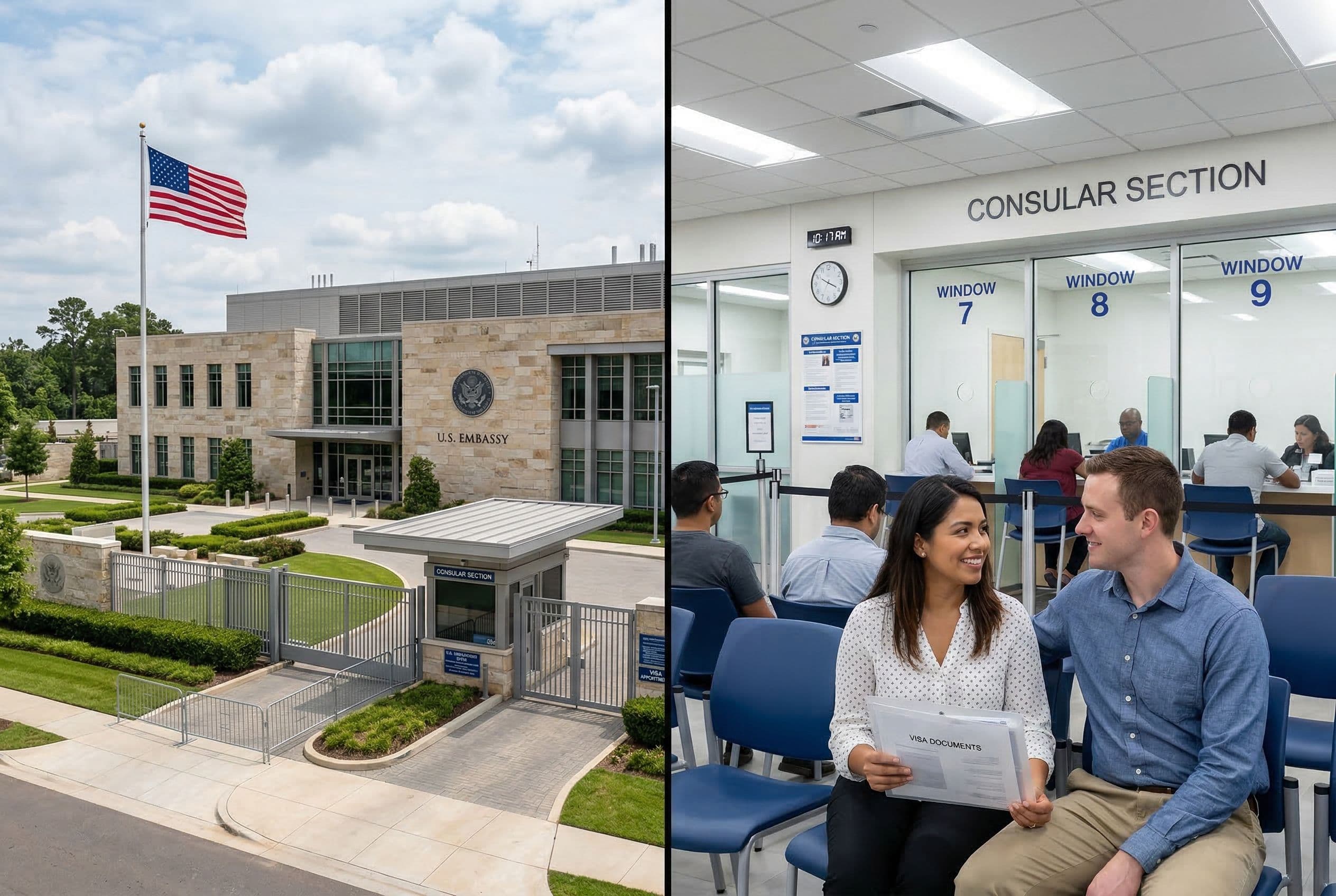
When called, you’ll approach a window or counter (in many cases, not a private room) for the interview. The officer may begin with basic questions to confirm your identity, then dive deeper into your relationship history and future plans.
Typical topics include:
- How did you meet your fiancé(e)?
- How long have you been together, and how often do you see each other?
- When and where do you plan to marry?
- What do your families think about your engagement?
- Do you share a common language or are there language barriers?
- Have you visited each other’s home countries?
- What are your fiancé(e)’s hobbies, job, or family details? (Officers often test how well you “know” each other.)
Language Considerations
If your fiancé(e) is not fluent in English, they may request an interpreter (if the consulate allows it) or the interview can be conducted in their native language. The key is to communicate clearly and consistently.
Interview Duration
A K-1 interview can be as short as 5–10 minutes or stretch beyond 30 minutes, depending on the complexity of your case and how the conversation unfolds.
Common Interview Questions & How to Answer Confidently
Below is a sample set of frequent K-1 interview questions. While not exhaustive, these represent typical themes to help you prepare.
- “How did you first meet?”
- What They’re Checking: Was there an in-person meeting? Is your story consistent with the timeline you provided on the I-129F?
- Best Practice: Provide dates and locations (e.g., “We met in October 2022 while I was traveling in Spain. We were introduced by mutual friends at a birthday party.”).
- “When did you get engaged?”
- What They’re Checking: The timeline for your relationship progression.
- Best Practice: Mention the exact date and share a quick anecdote or detail (e.g., “He proposed at a family gathering on December 10, 2022, in front of my parents.”).
- “Why did you decide on a K-1 Visa instead of marrying abroad?”
- What They’re Checking: Whether you understand the K-1 process and have legitimate reasons for planning a U.S. wedding.
- Best Practice: “We want our families in the U.S. to participate, and it’s easier for his/her family members there to attend.”
- “Have you met each other’s families?”
- What They’re Checking: Relationship legitimacy. It’s a good sign if you’ve connected with each other’s relatives.
- Best Practice: Share real interactions (photos or stories) if you’ve met them.
- “Do you have any wedding plans?”
- What They’re Checking: Evidence you intend to marry within 90 days.
- Best Practice: If you have a tentative date or venue, mention it. If not, at least show that you’ve discussed your wedding timeline, styles, or budget.
- “What do you love about your fiancé(e)?”
- What They’re Checking: Personal knowledge and genuine affection.
- Best Practice: Respond naturally but be specific (e.g., “He’s caring and supportive, especially during my recent career change.”).
- “Where does your fiancé(e) live/work?”
- What They’re Checking: Familiarity with daily life details.
- Best Practice: Cite the city and state in the U.S., mention their occupation if known. Consistency is key.
Tip: Always answer truthfully. Consular officers are trained to detect inconsistencies or memorized scripts.
Red Flags & How to Overcome Them
Certain factors can raise concerns, causing the officer to probe deeper:
- Significant Age Gap
- Advice: Present robust evidence of a genuine connection—emails, videos, consistent travel records, supportive statements from friends/family.
- Short Engagement
- Advice: Show that you’ve known each other well before deciding to marry (photos over time, call logs, social media interactions).
- Multiple Prior Marriages
- Advice: Provide final divorce decrees and be transparent about past relationships. Emphasize why this engagement is different/serious.
- Language Barrier
- Advice: Explain how you communicate daily (phone calls, translators, texting apps). Demonstrate you’ve spent time learning each other’s languages or bridging cultural gaps.
- Prior Immigration Violations
- Advice: If the beneficiary (or even the petitioner) previously overstayed or had a visa denial, be upfront about it. Provide any relevant waivers or clarifications.
- Lack of Face-to-Face Meetings
- Advice: If you’re claiming a cultural or hardship exception, document it thoroughly. Show attempts or planned visits if any exist.
Important: Red flags don’t mean an automatic denial; they simply require extra proof that your relationship is genuine and not solely for immigration benefits.
Possible Interview Outcomes
- Approval
- You’ll generally receive verbal confirmation (“Your visa is approved!”). The passport is retained for visa stamping and will be returned to you or sent via courier.
- Administrative Processing (221g)
- The consular officer may require additional documents or background checks. They’ll hand you a 221g form explaining what’s needed. Once you comply, they’ll continue processing.
- Refusal (Denial)
- If the officer suspects fraud or finds the applicant inadmissible, they may refuse the application. Sometimes, you can appeal or reapply if you correct the issues, but it’s critical to get legal advice immediately.
- Validity of the Visa
- If approved, the K-1 visa usually has a 6-month validity to travel to the U.S. You must marry within 90 days of entry or risk losing valid status.
Post-Interview Tips
- Track Your Passport & Visa
- The embassy website or local courier often provides tracking information so you’ll know when to pick it up or expect delivery.
- Plan the Trip
- Once you have the K-1 visa in hand, consider flight schedules and any final preparations in your fiancé(e)’s home country.
- Be Mindful of Customs Forms
- Upon arrival in the U.S., your fiancé(e) will fill out Customs Declaration forms. Double-check items you’re bringing in to avoid any CBP issues.
- Start the Wedding Preparations
- Since the clock starts ticking (90 days) as soon as they enter the U.S., it’s wise to have a wedding plan in place to avoid last-minute scrambles.
Why Choose Occam Immigration?
The K-1 visa interview is one of the most consequential steps in your immigration journey, and going in unprepared can mean months of delays or even a denial. At Occam Immigration, we take the guesswork out of this process so you and your fiancé(e) can walk into that consulate with confidence.
Here's how we help:
- Comprehensive document review:
- Mock interview preparation:
- Relationship evidence strategy:
- Post-interview guidance:
- Fast-Track-to-Filing™ program:
Whether your case involves a language barrier, prior immigration issues, or a complex relationship timeline, we have the experience to guide you through it. We've helped hundreds of couples successfully navigate the K-1 process from petition to entry.
The consular interview is a pivotal moment in your K-1 Fiancé(e) Visa journey. Proper preparation, honesty, and confidence can help your fiancé(e) breeze through. Remember, the officer is primarily checking that your relationship is sincere and that you meet eligibility criteria.
If you're approaching your K-1 interview and want to make sure you're fully prepared, don't leave it to chance. Our team can review your documents, walk you through a mock interview, and build a strategy tailored to your specific case.
Ready to prepare for your K-1 interview?