

If I had a dollar for every time a client told me their "visa" expired when they actually meant their status was about to lapse, I could retire early. It's one of the most common mix-ups in immigration law, and it's not just a matter of semantics — confusing these two concepts can lead to real problems.
The word "visa" gets used casually in everyday conversation, and it's almost always used incorrectly. "Status" is a less familiar term, but it's just as important — arguably more so once you're inside the United States. Let me break down the difference.
What is a Visa?
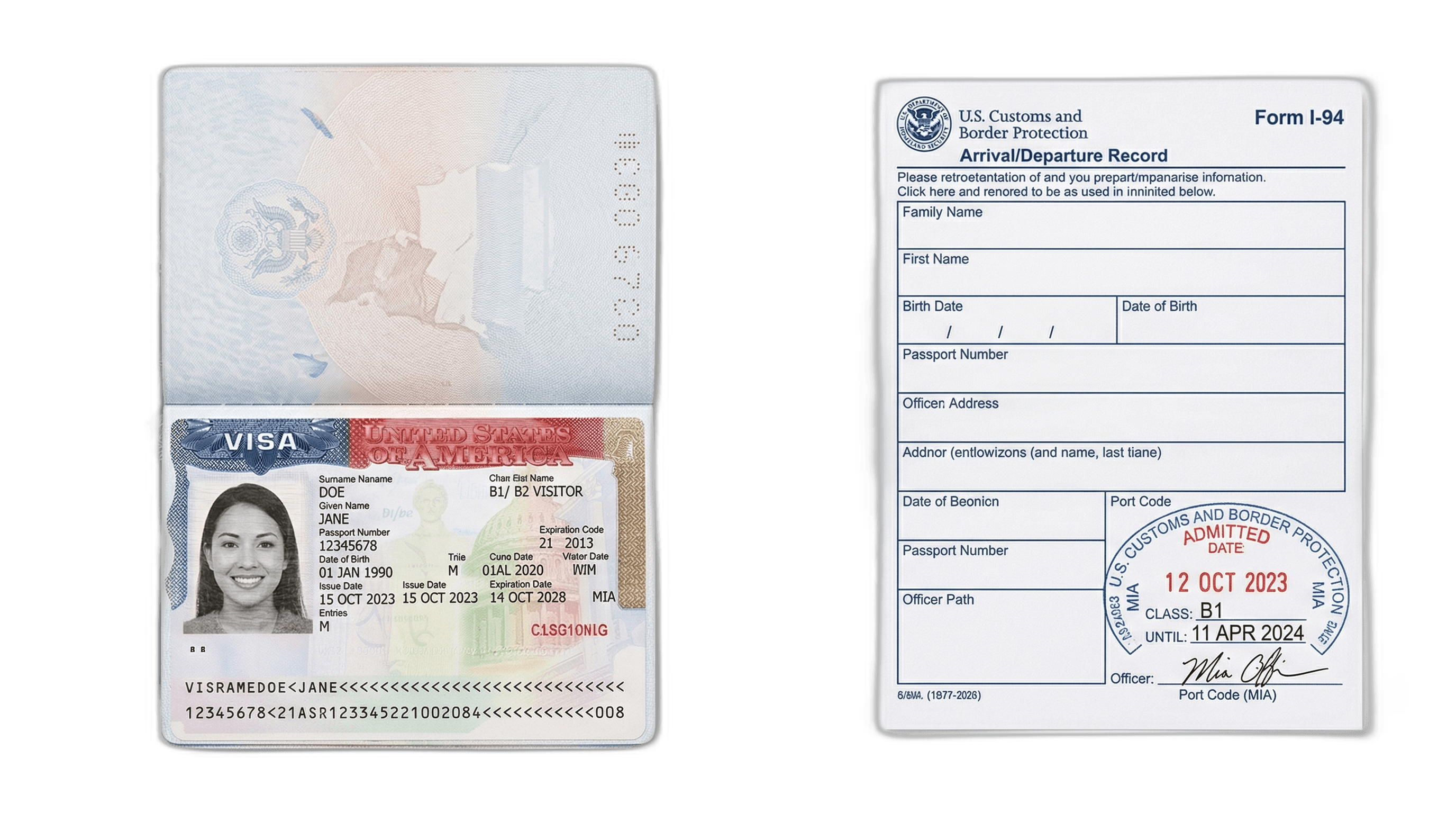
A "visa" is a travel document — a permit that allows a person to travel to the United States and request entry in a specific classification. Visas are issued by a U.S. consulate or embassy abroad, and they're sometimes called "visa stamps" or "visa foils" because they're physically stamped into your passport.
Here's an example. Say you want to visit the United States as a tourist. You'd apply for a B-2 tourist visa at the U.S. embassy in your home country. If approved, you get a visa stamp in your passport. Then you fly to the U.S. and present yourself at the border. The customs officer sees your visa, asks you a few questions, and — if satisfied — stamps your passport and lets you in.
The key thing to understand: the visa got you to the border. It gave you permission to knock on the door. But it didn't guarantee you'd be let in.
Does Having a Visa Guarantee Entry?
No. Having a visa does not guarantee admission to the United States. A customs officer must "inspect" you at the port of entry, which involves questions to determine whether you're entering for a purpose consistent with your visa classification. If you have a tourist visa but the officer suspects you're actually coming to work, you can be denied entry. The visa is a prerequisite, not a guarantee.
Does a Visa Expire?
Yes. A visa has an expiration date — it can be valid for as little as 30 days or as long as 10 years, depending on your classification and country of origin. You can use that visa to travel to the U.S. and request entry up until the date it expires.
And this is where the critical distinction comes in. Once you're inside the United States, the visa is no longer what governs your ability to stay. That's where "status" takes over.
What is Status?
Status is your formal immigration classification while you're inside the United States. When a customs officer admits you at the border, they stamp your passport with the port of entry, the date of entry, your classification (e.g., B-2 for tourist), and how long you're allowed to remain. The customs system also creates an electronic I-94 arrival record that you can look up online.
So if you entered on a tourist visa, your "status" in the U.S. is B-2 tourist status. Many people say "I'm on a tourist visa" when the correct phrase is "I'm in tourist status." It sounds like a small thing, but the distinction matters legally.
Your Visa Can Expire While Your Status is Still Valid
This is the point that trips most people up. You can be inside the United States with an expired visa and still be in perfectly valid status. For example, someone might enter on a 1-year tourist visa that expires while they're still within their authorized stay period. That's completely fine — the visa expiration only matters when you try to re-enter the country. As long as your status hasn't expired, you're legally present.
Here's another example I see frequently: someone arrives at the border on the last day their visa is valid. They're still admitted, and the customs officer grants them a full period of authorized stay — often six months for tourists. Their visa expired the next day, but their status runs for another six months. No problem.
What Happens if Your Status Expires?
This is the scenario you want to avoid. If your status expires, you are "out of status" in the United States. That means you no longer have authorization to remain, and immigration authorities technically have grounds to initiate removal proceedings.
The consequences get progressively more serious the longer you overstay:
- Any overstay makes it harder to get a visa in the future and increases the chance of being denied entry
- Out of status for more than 180 days but less than 1 year, then departing the U.S., triggers a 3-year ban on re-entry
- Out of status for more than 1 year, then departing, triggers a 10-year ban
Can You Extend or Change Your Status?
Yes, in some cases. If there's a valid reason to extend your authorized stay, it may be possible to file for an extension of status. Similarly, if your circumstances change — say you entered as a tourist but now want to study — you may be able to apply for a change of status. These applications must typically be filed before your current status expires.
The bottom line: don't confuse your visa with your status. Your visa gets you to the door. Your status keeps you in the room. Know when each one expires, and plan ahead. If you're unsure about your situation, reach out to our team. We're here to help you navigate it.