

Introduction
If you’ve ever felt your heart drop at the sight of a thin white envelope labeled “Request for Evidence (RFE)” from USCIS, you’re not alone. Dealing with the immigration process for your child can feel like you’re tiptoeing through a legal minefield. Even when your case seems simple—like filing for a Green Card for a child under 21—there are hidden pitfalls that can lead to delays. And delays mean more time apart or more time spent worrying that something might go wrong.
I’ve helped many parents through this process, and I know RFEs can strike terror in your heart—especially when all you want is for your family to be together. So here are five of the most common reasons parents end up with an RFE (plus my personal tips on how to avoid them).
Missing or Incorrect Signatures
Why It Happens: With so many immigration forms—like Form I-130 and I-485—it’s easy to miss a signature line or sign in the wrong spot. It sounds trivial, but even a single missing signature can cause an RFE.
How to Avoid It:
- Double-check every form before filing. I keep a checklist on my phone that reminds me which forms need “wet” (ink) signatures and which allow digital signatures (if any).
- If you hire an attorney, make sure they have a system for verifying signatures before sending out your packet.
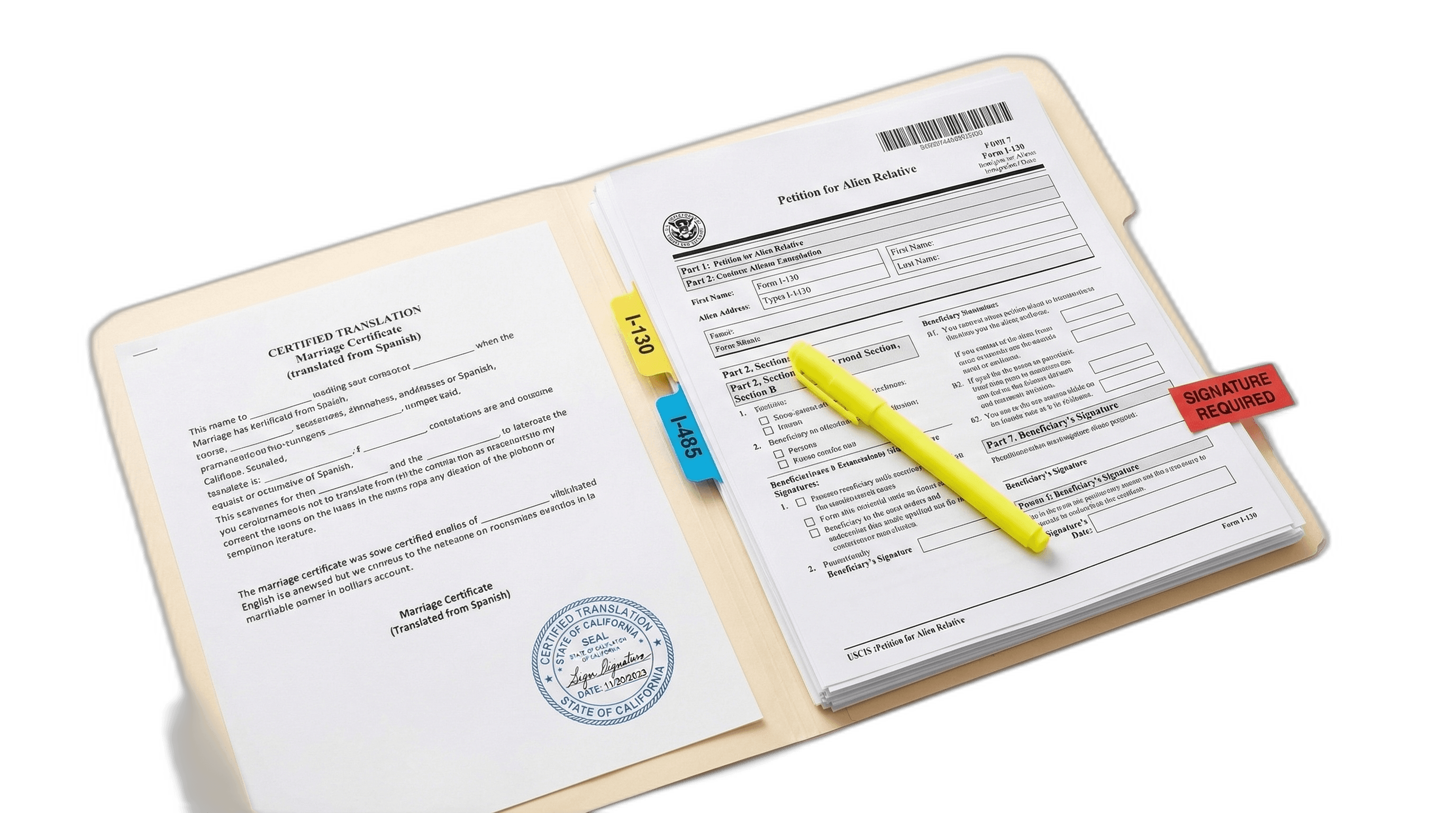
My Tip: When we prepare a packet at Occam Immigration, we do a “signature audit” where we physically highlight each place you or your child needs to sign. It’s saved dozens of families from the dreaded “signature RFE.”
Missing or Untranslated Documents
Why It Happens: If your child was born outside the United States, any birth certificate or other document in a foreign language needs a certified English translation. Families often forget this step, leading USCIS to ask for clarification.
How to Avoid It:
- Collect documents early. As soon as you decide to apply, make a list of what you have in a foreign language.
- Get them translated by a certified translator—not Google Translate or your bilingual cousin (unless they sign the proper certification).
- Keep extra copies. You never know if USCIS might ask for a backup.
My Tip: I once had a client scramble to find a last-minute translator for a rare language. Now, I always recommend looking into translation services right at the start. It saves so much stress down the line.
Inconsistent Details Across Forms
Why It Happens: Names, dates, or places of birth can show up differently on various documents. For example, your child’s birth certificate might list their middle name, but their passport doesn’t. USCIS will spot these inconsistencies and may request more evidence.
How to Avoid It:
- Check spelling of all names (including step-parents if applicable).
- If your child has used multiple names (maybe a nickname on school documents), be ready to provide affidavits explaining the differences.
- Use the same date format on every form to prevent confusion (e.g., MM/DD/YYYY).
My Tip: I always ask clients to share every version of their child’s name that has been used on official documents. We note all variations in a cover letter, so USCIS understands we’re aware and consistent.
Lack of Proper Relationship Evidence
Why It Happens: Proving the parent-child relationship is crucial. Sometimes parents submit only a birth certificate, but if there’s a question about paternity, adoption paperwork, or stepchild status, USCIS might want more proof.
How to Avoid It:
- Include multiple forms of evidence: birth certificates, adoption decrees, school or medical records listing you as a parent, and any other documents that show your involvement in the child’s life.
- If your child is a stepchild, show your marriage certificate indicating the marriage took place before the child’s 18th birthday.
My Tip: When I filed for my own nephew’s Green Card, we attached a small family photo album that clearly documented the relationship (including family gatherings over the years). It might seem simple, but pictures can illustrate genuine bonds in a way that plain forms can’t.
Timing & Age-Out Errors
Why It Happens: If your child is close to their 21st birthday, it’s a high-stakes race to file before they “age out.” Delays or missing forms can push you past that milestone.
How to Avoid It:
- Start early. The moment you know you plan to sponsor your child, get in touch with an immigration professional or begin research on your own.
- Understand the Child Status Protection Act (CSPA). Under certain conditions, it can freeze your child’s age, but you must follow the rules carefully.
My Tip: I’ve seen parents assume they “have time” because their child is 20, only to discover important documents were missing and the process took way longer than expected. If your child’s 21st birthday is around the corner, don’t wait—speed is your friend!
Conclusion: Keep Things Simple and Fast
Handling a child’s Green Card application is about more than just forms—it’s about avoiding separation and protecting your family’s future. An RFE doesn’t mean doom, but it does create extra worry and lost time. By taking these simple steps—like double-checking signatures, ensuring translations are done right, and providing consistent, thorough evidence—you can dramatically lower the chance of receiving an RFE.
Remember, I’m here to help. If you’re ready to file without the fear of a drawn-out process, reach out. With the right preparation, we can get your child’s application on the fast track, so your family can focus on being together—rather than dealing with the stress of government paperwork.