

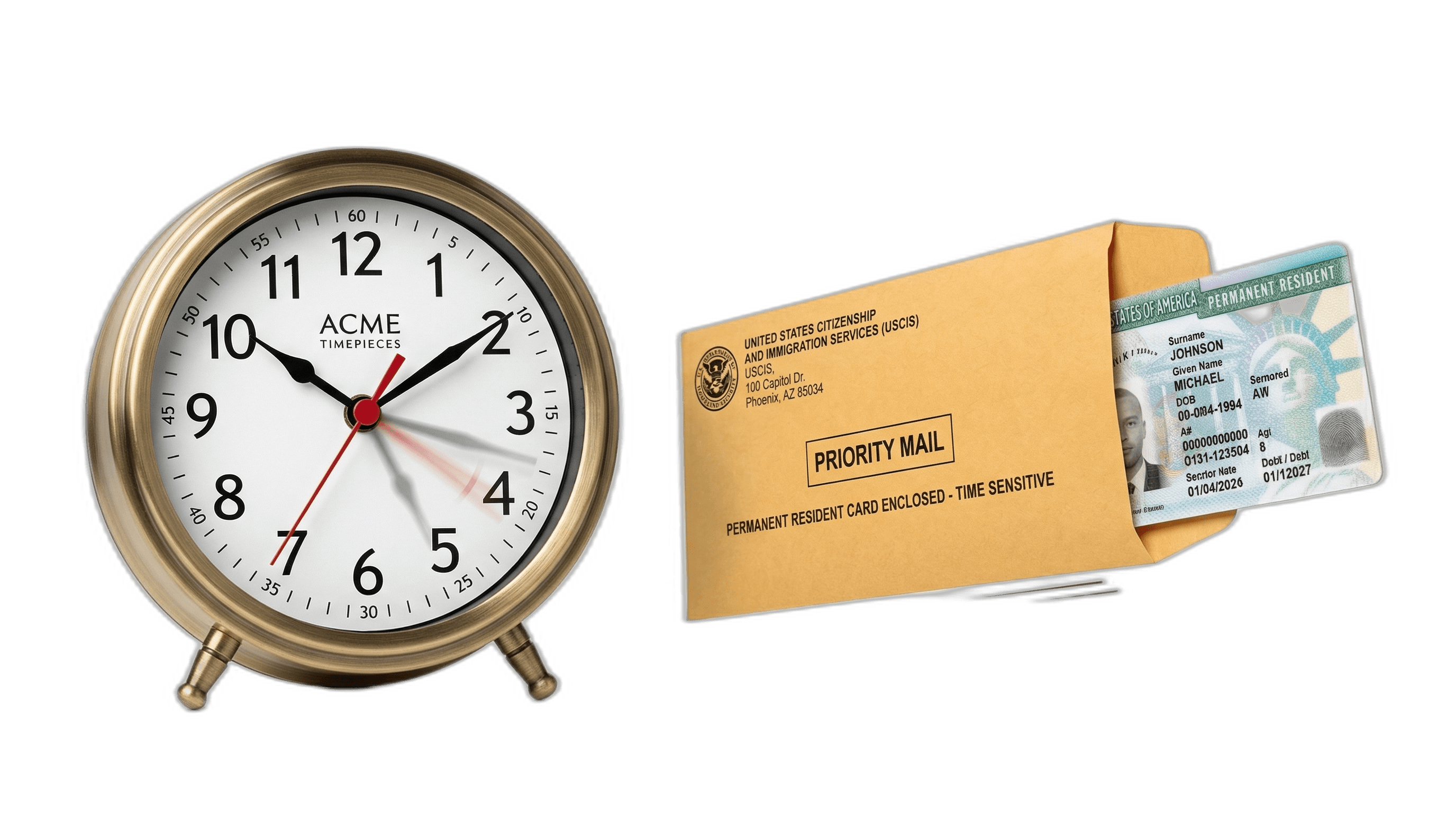
How to Expedite a Marriage-Based Green Card: Key Takeaways
A marriage-based green card can feel like a lifeline when you’re separated from your spouse, facing job uncertainty, or dealing with family or medical emergencies. While the normal process can take 9–24+ months, there are situations where you can ask the government to move faster.
Below is a concise, practical guide to when an expedite is realistic, how to request it, and what evidence you need to give yourself the best chance.
Can You Expedite a Marriage-Based Green Card?
Yes, sometimes. You can request expedited processing of certain parts of a marriage-based green card case through:
- USCIS (for petitions and applications filed in the U.S.)
- The National Visa Center (NVC) and/or a U.S. consulate/embassy (for consular processing cases)
There is no premium processing or paid “rush” option for family-based green cards. Expedites are discretionary and granted only when you clearly meet specific criteria.
Normal Timelines vs. Expedites
Typical processing time:
- Marriage-based green cards: usually 9–24+ months, depending on:
- USCIS workload and backlogs
- Local field office or consulate scheduling
- Security checks and case complexity
Why expedites are rare:
- USCIS generally follows a first-in, first-out system.
- Almost every couple feels their case is urgent; only truly pressing situations qualify.
- Expedites are not guaranteed, even with strong facts.
When USCIS Might Expedite a Case
USCIS uses narrow criteria. Your situation should clearly fit at least one of these, and you must prove it with evidence.
A. Severe Financial Loss
To the U.S. petitioner or a U.S. employer, such as:
- Imminent job loss or business closure directly tied to the immigration delay
- Foreclosure or eviction
- Loss of essential income that jeopardizes basic living expenses
You must show more than inconvenience or normal financial stress.
Examples of what may help:
- Employer letter stating your job will be terminated by a specific date if status is not resolved
- Eviction or foreclosure notices
- Proof that a business will lose a major contract or be forced to close
B. Urgent Humanitarian Reasons
Common scenarios:
- Need to care for a critically ill or disabled family member in the U.S.
- Urgent medical treatment that cannot be safely delayed or obtained abroad
- Dangerous or unstable conditions abroad affecting the foreign spouse
Examples:
- A U.S. parent with advanced dementia who needs daily care
- A child in the U.S. with a serious medical condition requiring both parents’ presence
- The foreign spouse living in a country with war, targeted violence, or severe instability
C. Compelling U.S. Government Interests
- A U.S. government agency (e.g., military, law enforcement, or another federal agency) requests expedited processing for reasons of national security, public safety, or other critical interests.
- This is rare and usually involves direct coordination with that agency.
D. Clear USCIS Error
- USCIS lost your file, misapplied the law, or caused an unusual delay clearly due to their own mistake.
- You’ll need proof (e.g., prior notices, tracking, or written acknowledgments).
Evidence That Strengthens an Expedite Request
Strong expedite requests are built on documents, not just explanations.
Medical & Humanitarian Evidence
- Doctor’s letters describing:
- Diagnosis and prognosis
- Why your spouse’s presence is medically or practically necessary
- What will happen if they are not present
- Hospital records, treatment plans, surgery schedules
- Letters from social workers, therapists, or care coordinators
Financial Evidence
- Eviction or foreclosure notices
- Termination or layoff warnings
- Employer letters explaining:
- Why your continued work or your spouse’s presence is essential
- Why the situation is time-sensitive
- Bank statements showing inability to meet basic obligations
Government / Official Letters
- Letters from U.S. government agencies supporting expedited handling
- Any official documentation showing deadlines or legal obligations
Explain the Cause-and-Effect Clearly
Your written request should connect the immigration delay directly to the hardship.
Stronger examples:
- Caregiving:
“My U.S. citizen father has advanced dementia and requires 24/7 supervision. I work full-time and cannot afford professional care. My spouse is the only available caregiver; without their presence, my father’s health and safety are at serious risk.”
- Employment / Financial:
“My employer has given me a written deadline: if my status is not resolved by [date], my position will be terminated. Losing this job would mean losing our only income and our ability to pay rent and medical bills.”
- Humanitarian / Medical:
“Our newborn has a serious medical condition that requires ongoing treatment in the U.S. I must work to maintain our health insurance, and my spouse is needed as the primary caregiver. There is no comparable treatment available in my spouse’s home country.”
Spell out the timeline, deadlines, and consequences.
How to Request an Expedite (Step-by-Step)
File the Case Normally
You cannot file a case as “expedited” from the start. You:
- Inside the U.S. (Adjustment of Status):
- File Form I-130 (Petition for Alien Relative)
- File Form I-485 (Adjustment of Status)
- Often file Form I-765 (Work Authorization) and Form I-131 (Advance Parole) together
- Outside the U.S. (Consular Processing):
- File Form I-130 with USCIS
- After approval, the case goes to the National Visa Center (NVC) and then to a U.S. embassy/consulate
Prepare an Expedite Packet
Create a clear, organized packet that includes:
- A cover letter explaining:
- Which form(s) you want expedited (I-130, I-765, I-131, etc.)
- Which expedite category applies (financial loss, humanitarian, etc.)
- A concise timeline and explanation of the hardship
- Supporting documents (medical, financial, employer, or government letters)
- Copies of relevant USCIS receipts and notices
Contact USCIS
- Call the USCIS Contact Center and request an expedite on the specific form(s).
- Be ready to email, upload, or mail your evidence if they ask.
- Write down:
- The reference number
- Date and time of the call
- Any instructions given
For consular/NVC cases, you may:
- Use the NVC public inquiry form or email
- Contact the embassy/consulate directly following their posted instructions
Follow Up Politely
- If you don’t hear back within the timeframe they mention, call or inquire again.
- Keep a log of all contacts and responses.
- Avoid daily or repetitive requests that add no new information.
Which Form Should You Try to Expedite?
In many marriage-based cases, the hardship is tied to:
- Inability to work (loss of income, insurance, etc.)
- Inability to travel (urgent need to see or care for someone)
Because of this:
- Expedite approvals for Form I-485 (green card application itself) are relatively rare.
- You may have better chances expediting:
- Form I-765 (Work Authorization) if the issue is income or job loss
- Form I-131 (Advance Parole) if the issue is urgent travel
Focus your request on the specific form that, if approved faster, would actually solve or reduce the hardship.
If Your Expedite Request Is Denied
A denial of an expedite does not mean your case is denied. It simply continues under normal processing.
If your expedite is denied:
- Keep your application active. Do not withdraw unless advised for a strategic reason.
- Review your evidence. Ask whether you:
- Clearly fit an expedite category
- Provided strong, objective documentation
- Look for other options. For example:
- Different work authorization categories
- Alternative travel options
- Consider professional help. An immigration attorney can:
- Reframe your arguments
- Identify overlooked evidence
- Suggest other strategies to reduce wait times
Common Missteps That Hurt an Expedite Case
Weak or No Evidence
- Only writing “We need to be together” or “We’re stressed” is not enough.
- USCIS wants specific, documented facts.
Overly Emotional, Light on Facts
- Emotion is understandable, especially in humanitarian cases.
- But decisions are based on tangible proof: letters, records, notices, and data.
Flooding USCIS with Repetitive Requests
- Multiple daily calls or emails without new information can backfire.
- Use polite, periodic follow-ups instead.
Ignoring Basic Eligibility
- An expedite does not fix underlying problems.
- You still must:
- Prove a bona fide marriage
- Clear background and security checks
- Meet all standard eligibility requirements
Setting Realistic Expectations
Even with a strong expedite request:
- You may shave off weeks or months, not necessarily get an instant decision.
- You may still need to:
- Attend an interview
- Respond to Requests for Evidence (RFEs)
- Wait for background checks
Patience is still part of the process. But if you have a genuine, well-documented urgency, an expedite request can be a meaningful tool.
Should You Request an Expedite?
Ask yourself:
- “Would a neutral person agree that my situation is truly urgent?”
- “Can I show a direct link between the immigration delay and a serious problem (financial, medical, safety, or caregiving)?”
- “Do I have documents to back up every major claim?”
If the answer to all three is yes, you’re a strong candidate to try for an expedite.
If you’re facing a critical situation and aren’t sure how to present it, you can seek tailored guidance from an immigration professional who can:
- Review your facts
- Help you organize evidence
- Draft a clear, targeted expedite request
When time is not on your side, a carefully prepared strategy can make a real difference.