

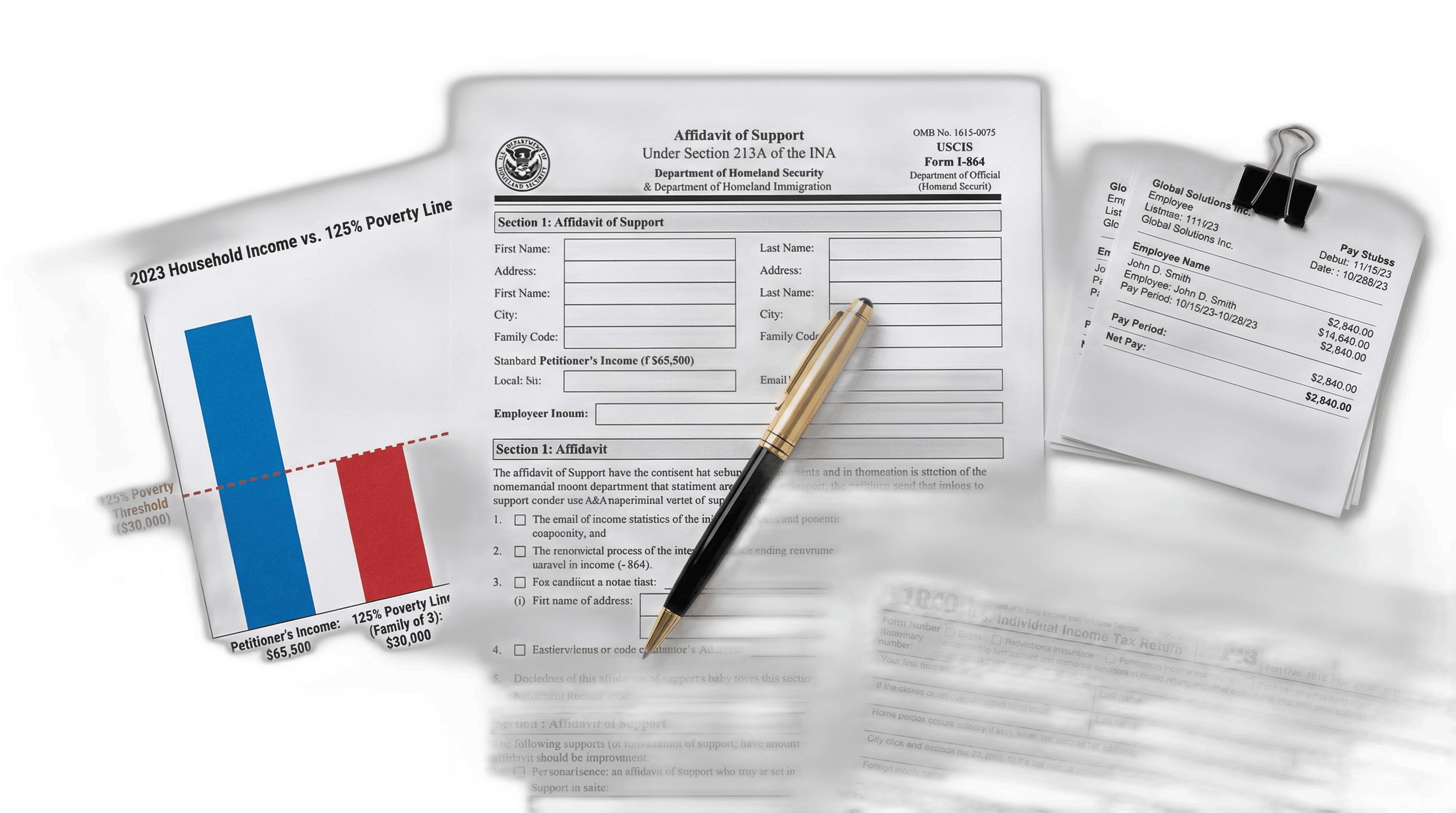
I once worked with a mother who was $2,000 under the annual income threshold for her daughter's green card. She'd been putting off filing for months because she was convinced the number would disqualify her — that the whole case was going to fall apart on a financial technicality. When she finally came in, we had the problem solved in about a week. Her sister became a joint sponsor, they filed together, USCIS never asked a follow-up question, and the case moved forward without any delay. Two thousand dollars short of a threshold, and the solution was a single phone call to a family member. I've seen clients stress about this for months when the fix was that simple.
The income requirement on the Affidavit of Support (Form I-864) is one of the most misunderstood pieces of a child's green card case. So let me walk you through how it actually works.
The Income Threshold: What It Actually Means
The I-864 requires the sponsor — usually a parent — to demonstrate income at or above 125% of the federal poverty guideline for their household size. The guideline gets updated every year, so you always want to check the current figures rather than relying on what someone told you last year.
Here's the part people often miss: household size includes everyone. Your spouse, your other kids, any dependents you've claimed on taxes, anyone currently sponsored under a prior I-864 — and the immigrant child you're now petitioning for. That number matters because the threshold scales up with household size. A single parent sponsoring one child has a lower threshold than a family of five sponsoring a child. Getting the household count right is one of the first things I do when reviewing a case, because miscounting it is a common error that creates unnecessary RFEs.
Your income figure comes primarily from your most recent federal tax return. USCIS is looking at your actual reported income — wages, salary, business income if self-employed. If you've had a recent job change or your income has increased since your last return, you can supplement with recent pay stubs and a letter from your employer, but the tax return is the anchor. I typically recommend having at least six months at your current employer if you're relying on a new position, because it makes the income story cleaner.
When You Need a Co-Sponsor
If your income alone doesn't meet the threshold, a joint sponsor — someone who is a U.S. citizen or permanent resident, is 18 or older, and is domiciled in the U.S. — can file their own I-864 alongside yours. They don't need to live with you. They don't need to be a relative. They just need to meet the income requirement based on their own household size, and they need to understand that signing an I-864 is a legally binding contract with the U.S. government.
I've seen grandparents, siblings, friends, and employers serve as joint sponsors. USCIS doesn't care about the relationship — only that the person meets the financial requirement and signs the form. The joint sponsor files a separate I-864, and both forms go into the package together.
One thing I always make sure clients understand: the joint sponsor's obligation doesn't end when the case is approved. The I-864 remains enforceable until the immigrant becomes a citizen, works for 40 quarters, or certain other conditions are met. That's a real commitment. Make sure your co-sponsor understands what they're agreeing to.
If you're slightly under the threshold and don't want to bring in a co-sponsor, assets can sometimes bridge the gap. Savings accounts, stocks, real estate — liquid or easily liquidated assets can be used to supplement income, though the math requires the asset value to be a multiple of the shortfall, and documentation requirements are strict. It's worth discussing with an attorney if assets are your primary backup, because USCIS scrutinizes asset claims carefully.
What USCIS Is Actually Looking For
USCIS isn't trying to catch you — they're looking for a coherent, consistent financial picture that confirms you can support your child without them turning to public benefits. That means your tax returns, pay stubs, and Affidavit of Support should all tell the same story. If your tax return shows income significantly different from your current pay stubs, you need to explain why. If your household size on the I-864 doesn't match your tax return, you need to explain that too.
The most common issues I see: household size miscounts, name discrepancies between tax returns and identity documents (especially with hyphenated names or stepfamily relationships), outdated federal poverty guideline figures, and tax returns submitted without all schedules and attachments. Any one of these can generate an RFE that delays the case by weeks or months.
The income threshold sounds scary until you understand the co-sponsor option. Don't let this one stop your case.