Filing a VAWA self-petition is one of the most important steps an abuse survivor can take toward safety and independence. The Violence Against Women Act gives you the legal right to petition for immigration status on your own — without your abuser's knowledge, without their cooperation, and without their control.
This guide walks you through every stage of the I-360 filing process. Whether you are just beginning to consider filing or are ready to assemble your package, you will find the practical, step-by-step detail you need here. For a broader overview of the VAWA program and who qualifies, see our VAWA service page.
Understanding the I-360 Form
Form I-360, officially titled "Petition for Amerasian, Widow(er), or Special Immigrant," is the form used to file a VAWA self-petition. Despite the generic name, this is the specific form Congress designated for abuse survivors seeking immigration relief under VAWA.
Who files the I-360?
You file the I-360 yourself — that is what "self-petition" means. Unlike most family-based immigration processes where a U.S. citizen or permanent resident spouse files the petition on your behalf, VAWA removes that dependency entirely. You are both the petitioner and the beneficiary.
You may file a VAWA self-petition if you are the abused spouse, former spouse (if divorced within the past two years due to abuse), intended spouse (if the marriage was not legally valid due to the abuser's bigamy), child, or parent of a U.S. citizen or lawful permanent resident who has subjected you to battery or extreme cruelty.
Where do you file?
All VAWA I-360 self-petitions are filed by mail with the USCIS Vermont Service Center (VSC). This is true regardless of where you live in the United States. The VSC has a dedicated unit specifically trained to handle VAWA cases with the sensitivity and confidentiality they require. The mailing address is listed on the USCIS website and on the I-360 form instructions — always verify the current address before mailing, as USCIS occasionally updates it.
Required Forms and Filing Fees
One of the most significant benefits of filing a VAWA self-petition is that there is no filing fee for the I-360. USCIS waives the fee entirely for VAWA petitioners. This removes a major financial barrier, especially for survivors who may have limited access to funds.
The core filing package
Form I-360 — The self-petition itself. Complete every applicable section. Leave sections that do not apply to your situation blank rather than writing "N/A" unless the instructions specifically say otherwise.
Form I-765 (Application for Employment Authorization) — You can file this concurrently with your I-360 or after receiving your prima facie determination. Filing it early is generally recommended so you can receive work authorization as soon as possible. Use category code (c)(31) for VAWA self-petitioners.
Form I-485 (Application to Register Permanent Residence) — If you are eligible to adjust status (you are physically present in the U.S. and your priority date is current), you may file the I-485 concurrently with the I-360. This is common for spouses and children of U.S. citizens. If your abuser is a lawful permanent resident, you may need to wait for a visa number to become available before filing the I-485.
Additional forms you may need depending on your situation include Form I-130 (if filed with a concurrent I-485), Form G-28 (if represented by an attorney), and Form I-912 (fee waiver request). Your attorney can advise on which combination is appropriate for your circumstances.
Building Your Filing Package
The strength of your VAWA case depends almost entirely on the evidence you submit. USCIS adjudicators will never meet you in person — they decide your case based on the documents in your filing package. Every piece of evidence matters. For a comprehensive look at evidence categories, see our VAWA evidence requirements guide.
Personal declaration
Your personal declaration (also called a personal statement or affidavit) is the centerpiece of your VAWA filing package. This is your opportunity to tell your story in your own words. It should be a detailed, chronological narrative covering your relationship with your abuser, the abuse you experienced, and how it affected you. We cover the declaration in depth in the next section.
Evidence of the qualifying relationship
You must prove that you have or had a qualifying relationship with a U.S. citizen or lawful permanent resident. This typically includes:
- Marriage certificate (for spousal claims)
- Birth certificates (for parent-child claims)
- Proof of the abuser's U.S. citizenship or lawful permanent resident status (naturalization certificate, passport, green card copy, or birth certificate)
- Divorce decree (if claiming as a former spouse who divorced within the past two years)
Evidence of abuse
VAWA covers both battery (physical violence) and extreme cruelty (emotional, psychological, financial, or sexual abuse). You do not need police reports or hospital records to prove abuse — though they strengthen your case if you have them. Acceptable evidence includes:
- Police reports or incident records
- Protective orders or restraining orders
- Medical records documenting injuries
- Photographs of injuries or property damage
- Text messages, emails, voicemails, or social media messages showing threats or abusive language
- Declarations from friends, family, neighbors, coworkers, teachers, or clergy who witnessed or knew about the abuse
- Records from shelters, hotlines, or domestic violence organizations
- Psychological evaluation from a licensed mental health professional
Evidence of good faith marriage
If you are filing as a spouse or former spouse, you must demonstrate that your marriage was entered into in good faith — meaning you married for genuine reasons, not solely for immigration benefits. Even in VAWA cases where the marriage was abusive, USCIS needs to see that you entered the marriage with honest intent. Evidence includes:
- Joint lease agreements, mortgage documents, or utility bills
- Joint bank account statements or shared financial records
- Wedding photos and photos of your life together
- Joint insurance policies or beneficiary designations
- Birth certificates of children born to the marriage
- Correspondence showing a genuine relationship (cards, letters, travel records)
Proof of U.S. residence
You must show that you reside in the United States at the time of filing. Acceptable documents include lease agreements, utility bills, bank statements, school enrollment records, or employment records with your U.S. address.
Good moral character documentation
USCIS requires evidence that you are a person of good moral character. This is typically demonstrated through local police clearance letters from every jurisdiction where you have lived for six months or more during the past three years, and a signed personal declaration attesting to your good moral character. If you have any criminal history — even minor offenses — discuss this with an immigration attorney before filing, as certain convictions can affect your eligibility.
The Personal Declaration
Your personal declaration is the single most important document in your VAWA filing. USCIS adjudicators rely heavily on your statement to understand what happened, assess your credibility, and determine whether you meet the requirements for VAWA protection. This is your voice in the process.
What to include
A strong personal declaration follows a chronological narrative structure. Begin with your background — where you grew up, your education, and how you met your abuser. Then describe the development of your relationship, when and how the abuse began, and how it escalated over time. Be specific. The declaration should cover:
- How you met your spouse and why you married — This establishes good faith marriage.
- Specific incidents of abuse — Include dates (or approximate dates), locations, what happened, what was said, and how you felt. "He hit me" is far less effective than "On or around March 2022, after I asked him about a late bill, he shoved me against the kitchen wall and told me I was worthless and that he would call immigration."
- Patterns of control — Financial control, isolation from friends and family, threats regarding immigration status, monitoring your phone or movements, preventing you from working or learning English.
- Emotional and psychological impact — How the abuse affected your mental health, your ability to function, your relationships with others, and your sense of safety.
- Steps you took to seek help — Calling a hotline, going to a shelter, confiding in a friend, seeing a therapist, calling police. If you did not seek help, explain why — fear, shame, language barriers, financial dependence, threats of deportation.
Format and length
There is no official length requirement, but most strong declarations are between 10 and 30 pages. Write in the first person. Use paragraphs and organize your statement chronologically. Number your pages. The declaration should be typed, signed, and dated. If you write in a language other than English, include a certified English translation.
Do not exaggerate or fabricate details. Credibility is everything in a VAWA case. If your written statement contradicts other evidence in your package, or if the adjudicator finds inconsistencies, it can seriously harm your case. Stick to the truth, be specific, and let the facts speak for themselves.
Filing and What Happens Next
Once your filing package is complete and organized, you will mail it to the USCIS Vermont Service Center. Here is what to expect after filing.
Receipt notice (Form I-797C)
Within approximately two to four weeks of USCIS receiving your petition, you will receive a receipt notice (Form I-797C) confirming that your case has been accepted for processing. This notice includes your receipt number, which you can use to check your case status online. Keep this notice in a safe place.
Prima facie determination
After reviewing your initial filing, USCIS will issue a prima facie determination — a preliminary finding that your petition appears to have merit based on the evidence submitted. This is not a final approval, but it is a critical milestone. The prima facie notice typically arrives within three to six months of filing. Once you receive it, several protections activate: you become eligible for deferred action status (meaning USCIS will not initiate removal proceedings against you), and you can apply for an Employment Authorization Document.
Request for Evidence (RFE)
USCIS may issue a Request for Evidence (RFE) if your filing is missing documents or if the adjudicator needs additional information to make a decision. An RFE is not a denial — it is a request for more evidence. You will receive a letter specifying exactly what is needed and a deadline to respond, typically 87 days.
Take RFEs seriously. Respond thoroughly and before the deadline. Organize your response with a cover letter that addresses each point raised in the RFE, followed by tabbed evidence. If you are represented by an attorney, they will prepare the response with you. If you are self-represented, consider consulting with an attorney specifically for the RFE response — it can make a significant difference in the outcome.
Final decision
After reviewing all evidence — including any RFE responses — USCIS will issue a final decision. If approved, you will receive a notice of approval and can proceed with adjustment of status if you have not already filed concurrently. If denied, you have the right to file a motion to reopen or reconsider, or in some cases to appeal to the Administrative Appeals Office (AAO). Denial is uncommon in well-prepared cases, but it underscores the importance of thorough evidence and careful preparation.
After Prima Facie Approval
Receiving your prima facie determination is a significant moment. It means USCIS has reviewed your petition and found that, on its face, it establishes eligibility for VAWA protection. Here is what this unlocks.
Deferred action status
Once you receive prima facie approval, you are placed in deferred action status. This means the Department of Homeland Security has determined that your removal from the United States is not a priority. While deferred action is not a formal immigration status, it provides a critical layer of protection — you cannot be deported while your VAWA case is pending.
Employment authorization
With your prima facie notice, you can apply for an Employment Authorization Document (EAD) using Form I-765 with eligibility category (c)(31). The EAD allows you to work legally in the United States. If you did not file the I-765 concurrently with your I-360, file it as soon as you receive the prima facie determination. You may also qualify for expedited processing if you can demonstrate urgent financial need.
Adjustment of status
If your I-360 is ultimately approved and you are in the United States, you can file Form I-485 to adjust your status to lawful permanent resident (green card holder). Spouses and children of U.S. citizens who filed concurrently may have their I-485 adjudicated shortly after I-360 approval. If your abuser is a lawful permanent resident rather than a citizen, you will need to wait for an immigrant visa number to become available. For more on the overall VAWA process and eligibility, see our VAWA 101 overview.
Common Filing Mistakes to Avoid
Filing a VAWA self-petition is a high-stakes process. Mistakes delay your case, trigger unnecessary RFEs, and in the worst cases can result in denial. Here are the most common errors we see.
Submitting an incomplete package
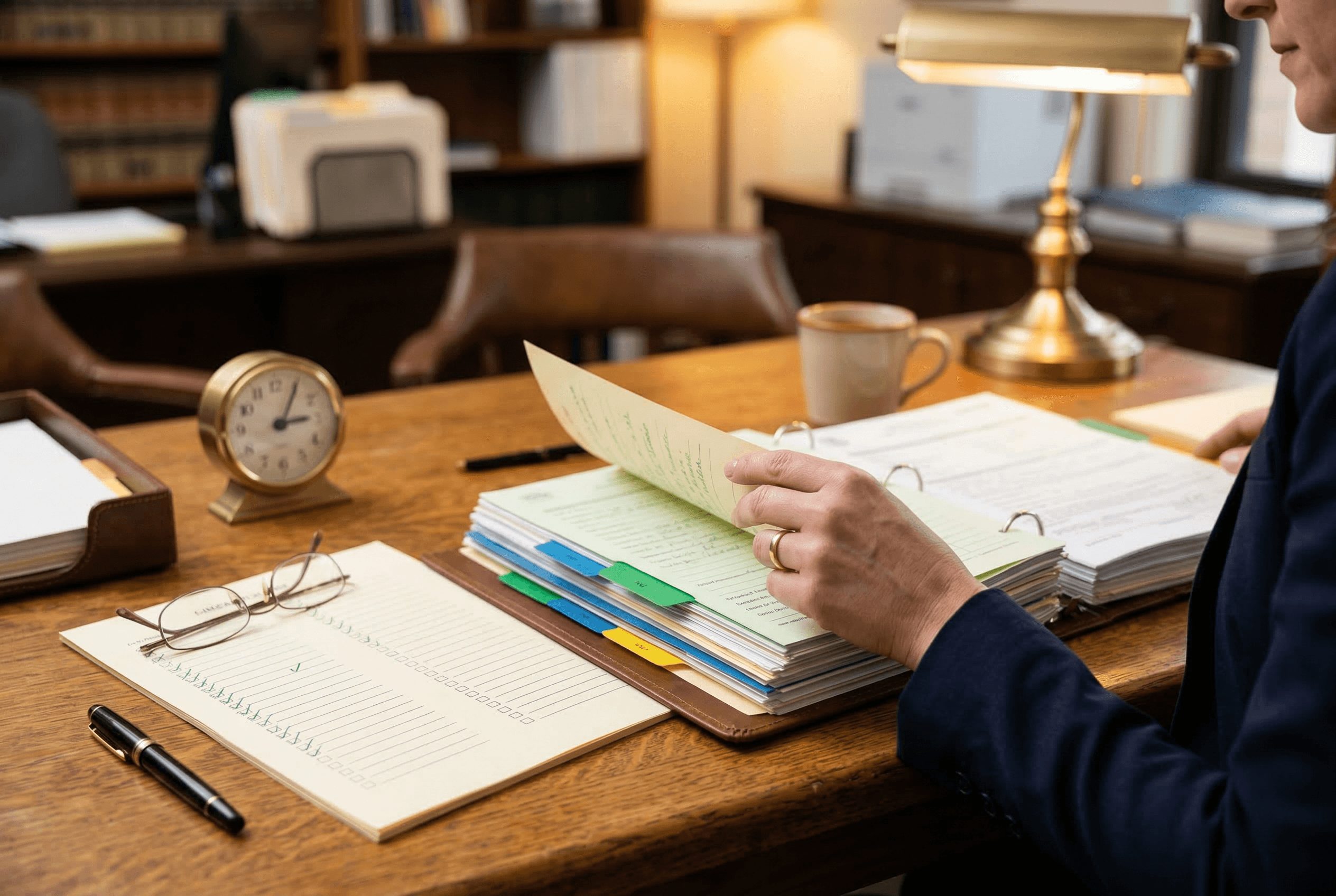
Missing forms, unsigned declarations, forgotten evidence exhibits — any gap in your package gives USCIS a reason to issue an RFE. Create a detailed checklist before you mail anything. Review every page. Make sure all forms are signed and dated. Include a table of contents and tab your evidence so the adjudicator can find everything easily.
Writing a generic declaration
A declaration that reads like a legal brief or uses vague language ("He was mean to me" or "The abuse was ongoing") will not persuade an adjudicator. Specificity is what separates a strong case from a weak one. Include dates, describe specific incidents, name the locations, and describe your emotional state. The adjudicator needs to see your experience through your eyes.
Neglecting good faith marriage evidence
Many petitioners focus so heavily on documenting the abuse that they forget to prove the marriage was entered in good faith. Both elements are required. If you have limited shared financial records because your abuser controlled the finances, explain that in your declaration and provide whatever you do have — even a few photos or a shared address on a document can help.
Disorganized evidence
USCIS adjudicators process many cases. A disorganized package — loose papers, no table of contents, unlabeled exhibits — makes the adjudicator's job harder and increases the chance that important evidence is overlooked. Organize your evidence chronologically or by category, use labeled tabs, and include a cover letter with a table of contents that references each exhibit by number.
Waiting too long to file
If you are divorced, you must file within two years of the divorce. If your abuser loses their immigration status or citizenship, it can affect your eligibility. And in practical terms, evidence becomes harder to gather over time — witnesses move, memories fade, documents get lost. File as soon as you are safely able to.
When to Get Legal Help
VAWA self-petitions do not legally require an attorney. You have the right to file on your own. However, VAWA cases are among the most complex and sensitive in immigration law, and the stakes are exceptionally high. A denied petition does not just mean a bureaucratic setback — it can mean the difference between safety and danger.
An experienced immigration attorney who handles VAWA cases can:
- Evaluate your eligibility and identify the strongest legal arguments for your case
- Help you organize and draft your personal declaration
- Identify gaps in your evidence and advise on how to fill them
- Prepare a complete, well-organized filing package that minimizes the risk of an RFE
- Respond to RFEs or notices of intent to deny
- Navigate the adjustment of status process after I-360 approval
- Ensure your abuser is never notified — maintaining the confidentiality protections that VAWA provides
If you are unsure whether you qualify for VAWA, start with our VAWA eligibility requirements guide. And when you are ready to move forward, reach out for a confidential consultation. Your case will be handled with the discretion and care it deserves.
Filing a VAWA self-petition is an act of courage. The process is demanding, the evidence requirements are substantial, and the emotional weight of documenting abuse is real. But the protections VAWA provides — independence from your abuser, the right to work, a path to permanent residency — are life-changing. You deserve a process that is handled with precision, empathy, and care.