

Let me start by saying: I’ve been where you are. Helping my own mother navigate the Green Card process was both exciting and downright nerve-wracking. There’s so much on the line—most importantly, the chance to finally live together without worrying about forced separation.
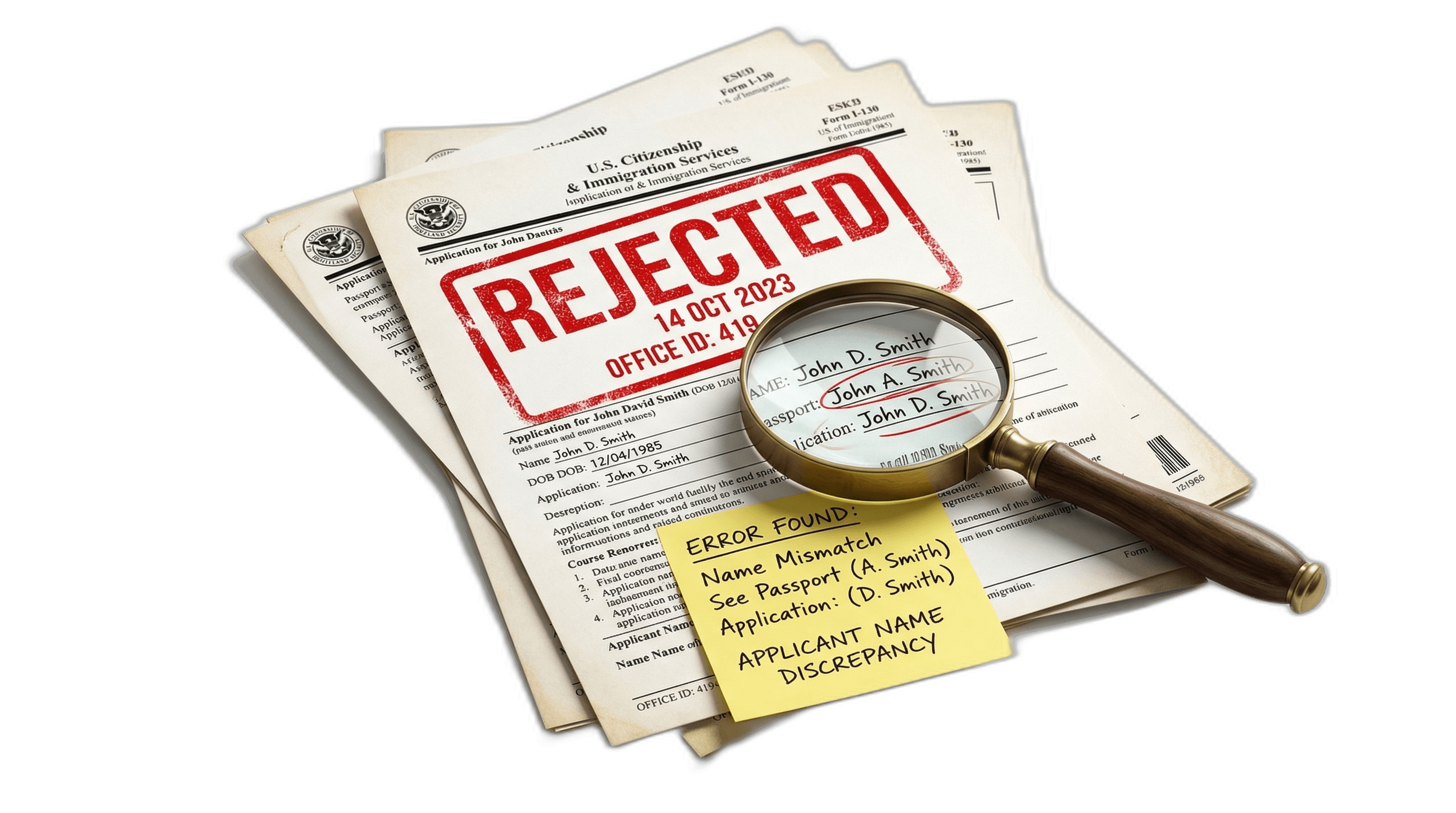
But paperwork can be a real pain. Even the simplest parent-based Green Card cases get tripped up when certain documents aren’t prepared correctly. Over the years, I’ve seen (and personally experienced!) how one missing translation or a slightly mismatched name can drag your case on for months.
With that in mind, I’ve put together this list of the top five document pitfalls I see most often. My hope is that by highlighting these common mistakes, you’ll be able to avoid them and keep your parent’s application running smoothly. If you need more in-depth guidance—about eligibility, financial sponsorship, or interview prep—check out our Green Cards for Parents main service page and the various sub-pages linked there.
Incomplete or Incorrect Birth Certificates
Why It’s a Pitfall
Birth certificates are the foundation of any family-based Green Card application. If there’s one document you don’t want to get wrong, it’s the piece of paper proving your parent-child relationship. A single mismatch in spelling or a missing detail can prompt USCIS to throw up a red flag.
Common Issues
- Missing Names: Believe it or not, some birth certificates from abroad don’t list both parents, which creates confusion.
- Different Spellings: I once spoke with a family whose mother’s name appeared as “Sophia” on her birth certificate but “Sofia” on her passport. That small difference led to a Request for Evidence (RFE).
How to Avoid It
- Double-Check: Compare the names and dates on all documents—yours and your parent’s—to make sure they align.
- Certified Translations: If the certificate isn’t in English, invest in a professional translator who can certify their work. Trust me, it’s worth it.
Untranslated or Poorly Translated Documents
Why It’s a Pitfall
USCIS is very clear: all foreign-language documents must be translated into English and accompanied by a certification of accuracy. Skimping on translations or using a “friend who speaks some English” can backfire quickly.
Common Issues
- Missing Key Details: A friend may leave out what they think is “unimportant” info, but that missing piece might matter to USCIS.
- No Certification: Without a signed statement confirming the translator’s competence, officials might reject the translation outright.
How to Avoid It
- Professional Translation Services: It doesn’t have to cost a fortune, but it’s an investment that gives you peace of mind.
- Keep Originals: Always keep a copy of the original document alongside the translated version, so you can prove authenticity if asked.
A family I worked with once discovered that the translator had overlooked an entire page of their dad’s birth certificate. When USCIS sent an RFE, panic set in. Had they used a professional from the start, they might have saved weeks (and a few gray hairs).
Incorrect or Missing Financial Documents
Why It’s a Pitfall
Even if your parent is considered an “immediate relative,” you still need to prove you (the sponsor) meet the financial requirements via the Affidavit of Support (Form I-864). If you don’t provide solid, up-to-date financial records, USCIS might question whether you can support your parent in the U.S.
Common Issues
- Outdated Tax Returns: I’ve seen people submit returns from three years ago without newer ones. This triggers doubts about current income stability.
- Insufficient Income: Some sponsors forget to factor in their own family size, plus one or two parents, which bumps up the required income level.
How to Avoid It
- Stay Current: Include your most recent tax returns, pay stubs, and employment letters.
- Be Realistic About Household Size: Don’t forget to count your parent(s) when adding up how many people you’re supporting.
- Consider a Joint Sponsor: If you’re short on income, a joint sponsor with sufficient earnings can fill the gap. Just make sure they also meet all the requirements (U.S. citizenship or Green Card, etc.).
For a quick rundown of parent-specific sponsorship challenges, head to our optional sub-page on Financial Sponsorship for Parents. It covers tricky scenarios like being a younger sponsor or using a parent’s foreign pension as part of the income proof.
Overlooking Past Immigration or Visa History
Why It’s a Pitfall
Has your parent ever overstayed a tourist visa? Entered the U.S. without inspection? Maybe they had a minor visa violation years ago that you completely forgot about. It’s tempting to assume “That was so long ago, maybe it doesn’t matter,” but I promise you—it does.
Common Issues
- Unclear Overstay Dates: Without solid documentation, USCIS can’t verify how long your parent was here unlawfully. That confusion often leads to processing delays or the dreaded 3- or 10-year bars.
- Hidden Removal Orders: If your parent was asked to leave the U.S. (voluntarily or otherwise) and never disclosed it, that can create serious roadblocks.
How to Avoid It
- Gather All Travel Records: Check old passports and I-94 records. Even a single missing entry/exit stamp can raise questions.
- Disclose Everything: If there's a risk of inadmissibility, talk to an immigration professional about waivers. Our sub-page on Overcoming Common Inadmissibility & Overstay Issues can help you figure out if you need one.
I had a relative who inadvertently overstayed a student visa by a couple of months back in the ‘90s. We didn’t even think to mention it until her interview, and it almost derailed the entire application. Honesty and thoroughness are your best friends here.
Failing to Keep Copies & Stay Organized
Why It’s a Pitfall
If there’s one piece of advice I give to every family, it’s keep copies of everything. USCIS, the National Visa Center (NVC), or the consulate might ask for additional documents at any point. If you’ve lost track, you’ll face major delays.
Common Issues
- Scrambling to Re-Request Documents: Not all countries make it easy to replace a lost birth certificate or official record.
- Last-Minute Chaos: An old address or a missing piece of evidence can turn your final interview prep into a stressful scavenger hunt.
How to Avoid It
- Create a Digital Folder: Save PDFs and scans of all forms, translations, IDs, and receipts.
- Use Cloud Storage: So you can access them anywhere, anytime.
- Label Everything: This might sound overkill, but you’ll thank yourself when you can instantly find that one missing piece of paper.
Bonus Thought: Don’t Do It All Alone
You might be thinking, “That’s a lot to handle.” And you’re right—it is. Filing a parent-based Green Card application involves many moving parts. If you’ve run into a tricky spot or just want someone else to do the heavy lifting, consider reaching out to Occam Immigration. Our Fast-Track-to-Filing Program is tailored to families looking to wrap up the paperwork fast—often within 30 days—so you don’t spend months sweating the small stuff.
Soft Call to Action
Ready to Get Those Documents in Shape?
Don’t let a missed detail become the reason your parent’s case is delayed (or worse, denied). If you want personalized help cutting through the red tape, check out our Green Cards for Parents main service page or contact us for a consultation. I’m here to make sure your parent has the best chance at a smooth, successful application.
Conclusion
Every family’s story is unique—but the pitfalls are often the same. If you can steer clear of these five common document mistakes, you’ll massively reduce the chance of running into RFEs or unanticipated setbacks. And remember, you don’t have to face this alone. With a bit of planning, careful paperwork, and (if needed) professional guidance, you’ll be one step closer to reuniting with your parent for good.
Here’s to checking off every box and getting your parent’s Green Card approved—no stress, no hidden surprises, and definitely no frantic 11th-hour document hunts. You’ve got this!